






Does ADSS Cable Installation Require Training?
ADSS cable installation requires specialized training due to the technical complexity, safety hazards, and compliance requirements involved. Installation crews must understand tension management, electrical field exposure, proper hardware selection, and live-line work procedures to prevent cable damage and worker injuries.
The question isn't whether training is necessary-it's what type and depth of training your installation team needs. ADSS (All-Dielectric Self-Supporting) cable presents unique challenges that differ fundamentally from standard fiber optic deployments, and the consequences of improper installation extend far beyond immediate safety concerns to include network reliability, equipment lifespan, and regulatory compliance.
Why ADSS Cable Installation Demands Specialized Knowledge
Installing ADSS cable differs from conventional fiber optic work in several critical ways. Unlike traditional fiber cables that rely on separate messenger wires for support, ADSS cables are self-supporting structures designed to span distances up to 1,200 meters between poles. This self-supporting design means the cable itself bears all mechanical loads-weight, wind, ice accumulation, and tension forces-making proper installation techniques absolutely essential.
The electrical environment adds another layer of complexity. ADSS cables are typically installed 10 to 20 feet below phase conductors on high-voltage transmission lines, placing them in intense electrical fields. While the cable contains no metallic components and is fully dielectric, improper positioning can lead to dry-band arcing and corona discharge that degrades the cable jacket. Installers must calculate and verify space potential exposure, particularly on lines exceeding 69 kV, to ensure the cable's track-resistant jacket can handle the electrical stress.
According to industry installation guidelines, ADSS deployment requires understanding of specialized equipment including bull wheel tensioners with brake and tension monitoring systems, pulling equipment with breakaway swivels rated above maximum pulling tension, and properly sized sheaves with diameters meeting specific ratios to cable diameter. Misuse of this equipment accounts for a significant portion of installation failures.
Technical Skills Required for Safe ADSS Cable Installation
The mechanical aspects of ADSS cable installation demand precise technical knowledge. Cable bending radius is strictly controlled-the allowable bending radius during installation must be at least 20 times the cable diameter, while the operational bending radius can be as tight as 10 times the diameter. Exceeding these limits causes fiber breakage that may not be immediately apparent during testing but leads to premature failure.
Tension management represents perhaps the most critical skill. Maximum pulling tension during installation typically should not exceed 600 pounds force, though this varies by cable specification. The cable must then be sagged to achieve the designed span tension, usually calculated to produce 1% installation sag. Incorrect tension creates a cascade of problems: too much tension stresses the aramid strength members and can cause microbending losses in the fibers; too little allows excessive sag that violates clearance requirements or permits dangerous galloping in high winds.
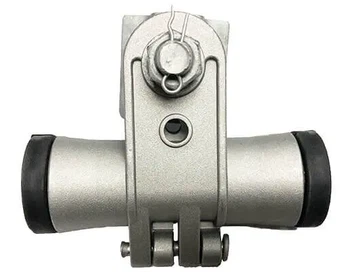
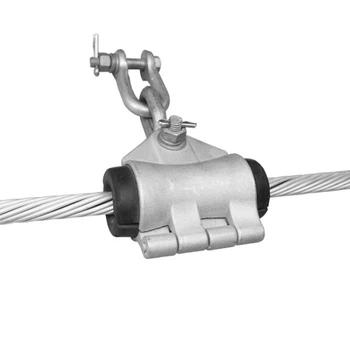
Hardware installation requires matching specific components to cable diameter and rated tensile strength. Suspension clamps, tension grips, and vibration dampers are not interchangeable between cable types. Installation manuals emphasize that hardware designed and produced based on ADSS diameter, RTS (Rated Tensile Strength), and span characteristics cannot be replaced randomly. Yet field reports indicate hardware mismatches remain a common source of failures.
The installation process itself involves coordinated operations between tensioner and puller operators who must maintain constant communication. During cable deployment, someone must synchronously observe the front end of the cable to check for contact with branches, buildings, or ground. When the cable end passes through tower pulleys, crews must verify smooth passage and inspect for surface damage. These aren't recommendations-they're necessary safeguards against the types of damage that compromise cable integrity.
Electrical Safety and Regulatory Compliance
Work on ADSS cables in electric supply spaces falls under OSHA 29 CFR 1910.268 for telecommunications work, but when cables are installed in supply spaces near high-voltage conductors, additional qualifications become necessary. The National Electrical Safety Code requires 40 inches of separation between supply and communications conductors, but utilities increasingly request installations as close as 4 inches under the neutral to maximize pole space.
This proximity creates significant safety concerns. During wet weather, moisture on the cable jacket can create leakage currents from phase conductors, producing currents on the ADSS cable or hardware. Industry guidelines specify that all personnel and equipment must be properly grounded, and the cable itself should be grounded before touching it. When installing under active phase conditions, the cable and sheaves require running grounds.
The safety training extends beyond electrical hazards. Workers must be competent in fall protection systems, as ADSS installation involves extended work at heights. They need familiarity with the Material Safety Data Sheets for chemicals used in splicing and termination. They must understand how to maintain safe clearances from power lines following NFPA Minimum Approach Distance rules.
Recent guidance from OSHA enforcement officials emphasizes that while telecommunications employees can work in supply spaces, they require specific task-based training that addresses the electrical hazards present. This doesn't necessarily require full qualification as an electrical worker under 1910.269, but it does demand documented training on recognizing and avoiding electrical hazards specific to the work environment.
Consequences of Inadequate Training
Field data reveals the real-world impact of insufficient training. One of the most common installation accidents involves fiber breakage and high loss points caused by uneven pulling speeds and inconsistent force application during deployment. When traction speed varies or constant tension isn't maintained, localized stress concentrates in the cable. Sometimes this breaks the central FRP (Fiber Reinforced Plastic) strength member-because FRP is non-metallic, the broken cable retracts, causing dislocation that damages the loose tube containing optical fibers.
Fiber breakage at tensile ends occurs frequently within 1 meter of hardware terminations. This typically results from improper operation when installing pre-twisted wire fittings, or from inadequate traction angles when tightening lines. The optical cable must be subjected to straight-line force; when crews pull at angles or fail to maintain proper direction, localized bending creates failure points.
Appearance damage from improper routing through rocky terrain or contact with tree branches seems minor but compromises the outer jacket that protects against environmental degradation. In high-voltage environments, even small jacket damage can accelerate dry-band arcing that would otherwise take years to develop. Utilities have reported ADSS cable failures on high-voltage lines where the high electric field generates continuous corona discharge at the end of supporting armor rods, and polluted environments with occasional wetting can cause dry-band arcing that severely damages jackets in just a few incidents.
The economic impact extends beyond repair costs. Improperly installed cable may initially test within specifications but fail prematurely, requiring expensive replacements within 5-10 years instead of the expected 25-30 year lifespan. Poor installation technique often voids manufacturer warranties, leaving network operators financially responsible for failures that proper training would have prevented.
Training Pathways and Certifications
While no ADSS-specific certification exists, several established programs provide the foundational knowledge and skills necessary for competent installation. The Fiber Optic Association's Certified Fiber Optic Technician (CFOT) certification represents the industry baseline, covering fiber optic theory, codes, standards, and best practices. The CFOT exam requires demonstrating knowledge and skills in training courses or documented field experience, and certification must be renewed every three years.
For ADSS work specifically, training should follow IEEE Standard 1222, which covers construction, mechanical and electrical performance, installation guidelines, and acceptance criteria for ADSS fiber optic cable. Installation crews need hands-on training with the actual equipment they'll use: bull wheel tensioners, specific pulling grips, properly sized sheaves, and tension monitoring equipment.
Manufacturer-provided training often represents the most practical pathway. Cable and hardware manufacturers typically offer installation courses that cover their specific products, including proper hardware selection, installation procedures, and troubleshooting. These courses provide hands-on experience with the equipment and typically include field supervision during initial installations.
Some organizations pursue the Certified Network Cable Installer (CNCI) credential, which includes comprehensive fiber optic training, though this program focuses more broadly on network cabling rather than the specialized requirements of aerial ADSS deployment. The Electronics Technicians Association offers Fiber Optic Technician certifications with outside plant specializations that address aerial installation challenges.
The training investment varies significantly. Basic CFOT certification courses run 3-5 days and cost $1,500-3,000 including exam fees. Comprehensive programs that include copper and fiber certification can extend to 10-12 days and cost $4,000-6,000. Manufacturer-specific ADSS training typically runs 2-4 days and may be included with large cable purchases or charged separately at $1,000-2,000 per participant.
Practical Training Components
Effective ADSS training combines classroom theory with extensive hands-on practice. Trainees need to understand the physics of self-supporting cable behavior under various load conditions, including calculations for sag and tension under different temperature and loading scenarios. They should learn to interpret engineering specifications that define maximum installation tension, minimum bending radius, and proper hardware selection for specific cable types and span lengths.
Equipment operation requires supervised practice. Setting up tensioners and pullers correctly, adjusting brake tension, monitoring pulling force in real-time, and coordinating between equipment operators are skills that develop through repetition under experienced supervision. Trainees should practice on representative spans before attempting actual installations, particularly for high-value or critical circuits.
Safety procedures deserve special emphasis. Pre-installation site assessments must identify overhead clearances, determine required grounding points, and establish exclusion zones. Trainees need experience with testing equipment to verify cable performance before and after installation, including OTDR (Optical Time Domain Reflectometer) testing to establish baseline signatures and verify no damage occurred during deployment.
Installation planning represents another critical skill set. Determining cable drum placement to achieve proper offset ratios, selecting splice locations with adequate slack storage, planning for temporary guying of deadend poles during tensioning, and coordinating with utility operations for work near energized lines all require judgment that comes from structured training and mentored experience.
Industry Standards and Best Practices
Beyond IEEE 1222, ADSS installation should follow IEEE 524 "Guide to the Installation of Overhead Transmission Line Conductors," which provides relevant procedures for aerial cable deployment. The National Electrical Safety Code establishes clearance requirements and safe work practices for fiber optic cables in supply spaces. Installation must also comply with local utility standards, which often impose more stringent requirements than national codes.
Quality standards typically require documentation throughout the installation process. Pre-installation testing establishes baseline optical performance for each fiber. During installation, tension logs record actual pulling forces to verify they remained within specifications. Post-installation OTDR testing confirms no damage occurred and provides baseline data for future troubleshooting. Hardware installation must be photographed to document proper placement and configuration.
Many utilities now require that ADSS cable installation contractors provide proof of training for all field personnel. This typically includes copies of relevant certifications (CFOT, manufacturer training certificates) and documentation of safety training specific to work near high-voltage lines. Contractors unable to demonstrate adequate training credentials may be excluded from bidding on projects, particularly those involving transmission voltages above 69 kV.
Building an ADSS Cable Installation Team
Organizations planning significant ADSS deployments face decisions about developing internal capabilities versus contracting with specialized installers. Internal teams offer better control and availability but require substantial training investment and may lack experience with edge cases and complex installations. Experienced contractors bring proven capabilities but at premium costs and with potential scheduling constraints.
A hybrid approach often works best: develop internal teams for routine installations while partnering with experienced contractors for complex projects and to provide mentoring for your crews. This strategy allows knowledge transfer while managing risk on challenging installations.
For internal teams, plan on at least two weeks of intensive training followed by supervised installations before allowing independent work. Initial installations should involve relatively straightforward spans under direct supervision from experienced personnel, either your most skilled technicians or contracted mentors. Gradually increase complexity as the team demonstrates competency.
Ongoing training matters as much as initial certification. Cable and hardware technologies evolve, with new products offering improved performance or addressing specific failure modes. Installation techniques advance as the industry learns from field experience. Annual refresher training and periodic re-certification ensure teams maintain current knowledge and skills.
Making the Training Decision
The question isn't whether ADSS cable installation requires training-clearly it does. The real questions are how much training, what specific content, and how to verify competency before allowing unsupervised installations.
At minimum, installation crews need CFOT certification or equivalent demonstrated experience, manufacturer-specific training on the cable and hardware they'll install, and documented safety training covering work near high-voltage lines. For installations on transmission lines above 69 kV or in challenging environments (severe weather zones, difficult terrain, environmentally sensitive areas), more extensive training and supervised experience become necessary.
The cost of inadequate training far exceeds the investment in proper preparation. A single cable failure requiring replacement can cost $50,000-200,000 when you account for cable, labor, traffic control, and network downtime. Proper training might cost $5,000-10,000 per technician-a bargain compared to the risk of expensive failures, potential safety incidents, and the reputational damage from unreliable installations.
Frequently Asked Questions
Can experienced fiber optic technicians install ADSS cable without additional training?
Standard fiber optic experience doesn't prepare technicians for ADSS cable installation challenges. The self-supporting design, tension management requirements, electrical environment considerations, and specialized hardware differ fundamentally from premise or underground fiber work. Even experienced technicians need ADSS-specific training covering mechanical design, proper tensioning, hardware selection, and safety procedures for work near high-voltage lines.
How long does ADSS cable installation training take?
Basic competency requires 3-5 days of classroom and hands-on training covering cable characteristics, installation equipment, procedures, and safety. This should be followed by supervised installations on at least 5-10 spans before allowing independent work. Total time from initial training to independent competency typically spans 2-4 weeks, depending on complexity of installations and availability of experienced supervision.
Are there legal requirements for ADSS cable installation training?
While no specific ADSS certification is legally mandated, OSHA regulations require employers to ensure workers are competent to perform assigned tasks safely. For work near high-voltage lines, this means documented training addressing electrical hazards. Many utilities contractually require proof of relevant certifications (CFOT, manufacturer training) and safety training before allowing contractors to work on their systems. Insurance companies may also require documented training as a condition of coverage.
What's the difference between CFOT and manufacturer-specific ADSS training?
CFOT provides foundational knowledge of fiber optic principles, standards, and general installation practices applicable across all fiber types. Manufacturer-specific ADSS training focuses on the unique requirements of aerial self-supporting cable: mechanical design principles, tension calculations, hardware selection and installation procedures specific to their cable products. Both are valuable-CFOT establishes the foundation, while manufacturer training addresses ADSS cable installation specifics.
Data Sources:
IEEE Standard 1222-2019 - IEEE Standard for Testing and Performance for All-Dielectric Self-Supporting (ADSS) Fiber Optic Cable
Installation guidelines from major ADSS manufacturers (Prysmian, Zion Communication, OFS)
OSHA 29 CFR 1910.268 - Telecommunications safety standards
National Electrical Safety Code (NESC) clearance and safety requirements
Field failure analysis reports from utilities and cable manufacturers
Fiber Optic Association (FOA) certification standards and training requirements