



adss aerial fiber optic cable case study: how we delivered speed, safety, and scale on poles
We needed a fast, safe way to run backbone fiber along existing power corridors without trenching or metallic hardware. That is exactly what an adss aerial fiber optic cable gives you. In this end-to-end case study, we walk through a real 42-km build: the constraints we faced, the choices we made, the on-site moves that saved days, and the data that proved the approach. You can lift the steps, the bill-of-materials logic, and the acceptance checklist for your own route and be confident it will work.
Project background for adss aerial fiber optic cable: where the route ran and what was at risk

The client is a regional utility serving hills, river valleys, and mixed wood-and-concrete poles. The goal was to connect two substations, a water plant, and several underserved communities. The clock was tight because the rainy season pushes roads out of reach. Outages were not allowed, and budgets were fixed. The only way to hit the window was to use existing poles and keep crews away from energized metal.
The adss aerial fiber optic cable fit the brief for three reasons. First, it is all-dielectric, so there is no induced current path and no grounded messenger. Second, it rides the pole line below conductors, so the team avoids shield wire work. Third, it installs with simple gear-stringing blocks, a small winch, and a disciplined bend-radius game-so local lineworkers can ramp fast.
We also set three guardrails before kickoff. We needed a spec that any qualified vendor could meet. We wanted a clean upgrade path from 48 fibers today to 96 later. And we wanted pull lengths that a small crew could finish in one shift, even with weather hiccups.
Initial challenges with adss aerial fiber optic cable we could not ignore

Reality vs drawings. Desktop maps showed comfortable 300–500 m spans. The field survey spotted three river crossings near 700 m and several gusty ridgelines. That pushed us to higher-class dead-ends and a firmer damper plan.
Sheath zoning. Most of the corridor ran under 35–69 kV. Two substation approaches produced higher fields and contamination drip paths under insulators. We split the bill: PE jacket for routine segments and AT (anti-tracking) jacket for high-field or polluted zones. That single decision cut cost and lowered tracking risk.
Accessory mismatch risk. Hardware lead times can outrun cable. If you guess the outer diameter (OD) or span class, you park trucks. We locked the adss aerial fiber optic cable OD early and matched dead-ends, suspensions, and dampers to the chosen family.
Crew skills. Good lineworkers were available, but few had handled long-span ADSS. We set a one-day yard lab with the actual blocks, a breakaway link, and mock poles. That short practice removed the learning curve tax from the first day on the line.
Problem diagnosis for adss aerial fiber optic cable: how the data shaped the plan

We chopped the 42-km route into six segments based on terrain, wind exposure, and field conditions. For each segment we logged:
True span lengths with laser rangefinder and GPS, not just map estimates.
Wind and gust behavior using ridge aspect and local station logs.
Contamination paths wherever crossarms and insulators shed water and grime.
Field strength hot spots within substation approach envelopes.
Access quirks like narrow tracks, bridge load limits, or tight corners.
Patterns emerged fast. Town blocks with short spans needed standard suspensions and simple closures. River and ridge runs needed upgraded dead-ends and asymmetrical dampers every 60–80 m. Substation approaches called for AT sheaths and tidier hardware dressing to keep surface gradients low.
Solution design for adss aerial fiber optic cable: simple choices that scale

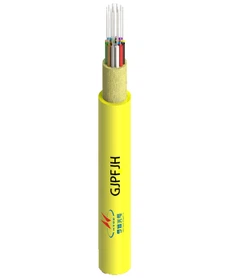
Cable family. We chose a compact 48F adss aerial fiber optic cable with aramid yarn strength members and a nominal OD around 11.5–12 mm. That OD keeps fittings small, controls weight, and makes handling easier on long pulls. For high-field sections, we specified the same fiber count and core but swapped to an AT outer sheath. One family, two jackets, no splice penalty.
Standards and tests. We wrote a lean spec that a field crew can live with. The cable meets common utility ADSS performance expectations and standard fiber attenuation/mechanical tests. Acceptance used light source/power meter plus OTDR at hand-over, with thresholds printed on the crew's daily card.
Accessory set.
Dead-ends: sized to the exact OD band of the chosen cable family; never to catalog "typical."
Suspension clamps: standard aerial sets with armor rods for gentle load sharing.
Dampers: asymmetrical on long, windy runs; none on quiet town spans.
Aerial closures: strain-relieved, pole-mounted, one per drum segment.
Logistics logic. We cut drums to ~2.4 km pulls. That converts into "one shift, one segment" for a small crew. Each drum shipped with a laminated first-out tag and a kitted box: closures, two dead-ends, suspension sets, damper count, spare grips, and stainless bands.
Work sequencing. Four crews moved leapfrog style: prep, pull, dress, and test. The test team rode the same truck and closed OTDR traces before the bucket came down. Fixes happened same-day, not next week.
Implementation steps for adss aerial fiber optic cable: the five moves that made the schedule

Step 1 - Survey and stake. We walked the line, verified the long spans with a rangefinder, and tagged poles with durable IDs. We sketched obstacles and marked turning points where block geometry could pinch bend radius.
Step 2 - Jacket zoning. We shaded high-field and pollution segments and assigned AT sheath only there. Everywhere else used PE sheath. The final split was 36.4 km PE and 5.6 km AT, which trimmed cost and reduced risk.
Step 3 - OD-first hardware match. We locked the cable OD, then matched dead-ends and suspensions to that OD band and span class. For the three ~700 m river spans, we chose the higher hardware class and pre-checked sag-tension for cold mornings and hot afternoons.
Step 4 - Drum-by-pull kitting. Each drum shipped with the exact fittings and a small buffer kit. A pallet tag listed "Drum A1: 2 dead-ends, 6 suspensions, 42 dampers, 1 closure, bands, ties." Crews did not waste minutes hunting parts.
Step 5 - Hang, dress, then test live. We used stringing blocks and a light winch, kept bend radii wide, set dampers on painted stations, and ran light source/power meter plus OTDR slices while the bucket was still up. If a splice or clamp needed attention, the fix landed before the truck moved.
On-site adjustments for adss aerial fiber optic cable: little choices, big payoffs
Field conditions always ask for tweaks. At a road corner, a crossarm's contamination drip line sat right above our planned attachment. We slid the attachment 30 cm, added a small guard, and kept the cable clean. On a windy ridge, flagging told on gusts before lunch; we tightened damper spacing by adding two units per long span. None of this needed a new purchase order because the buffer kits rode with the drums.
We also learned that crew morale climbs when pulls end each day. A single long pull looks efficient on paper; a two-shift pull drags energy and invites mistakes. The adss aerial fiber optic cable does not care; the calendar does. One-shift segments win.
Results with adss aerial fiber optic cable: the metrics that matter to buyers

Total duration: 41 calendar days from first string to final acceptance, inside the eight-week window.
Outages: zero. Work happened below conductors with an all-dielectric cable, so line operations stayed untouched.
Crew productivity: ~1.9 km/day average over 22 workdays with four small crews.
Longest span: 710 m across a river valley, hung and dressed without a re-pull.
Test outcomes: OTDR and continuity passed on Day 34 for the first lit segment; the punch list closed by Day 41.
Upgrade path: the corridor can take a parallel 48F later using the same hardware pattern; no retraining required.
These numbers are not heroic. They are repeatable because the plan was boring on purpose: right OD, right fittings, right jacket zoning, and kit everything by pull.
ADSS vs OPGW: a decision table for adss aerial fiber optic cable buyers
| Decision lens | adss aerial fiber optic cable | OPGW |
|---|---|---|
| Outage need | No planned outage; hangs on poles below conductors | Often needs line work on shield wire; outage or special live-line |
| Metal path | All-dielectric; no induced current | Metallic ground wire; part of power system |
| Best corridor | Distribution and sub-transmission pole lines | High-voltage shield-wire replacement on towers |
| Accessory scope | Dead-ends, suspensions, dampers, aerial closures | Tower grips, OPGW splice boxes, special tools |
| Cost drivers | Sheath type (PE vs AT), span class, damper count | Tower windows, specialized crews, OPGW handling |
| Schedule control | High; utility or contractor line crews can execute | Moderate; depends on tower access and outages |
| Future adds | Easy to add a parallel ADSS run | Coupled to grid work and tower plans |
Plain reading: If you control poles and need speed without outages, ADSS is the default. If you are already replacing a shield wire on a transmission line, OPGW fits that job.
Seven non-negotiable checks for adss aerial fiber optic cable deployments
Lock the OD early. Hardware choice flows from OD; last-minute cable swaps stall trucks.
Zone the sheath. Use AT only where field strength or pollution demands it; keep PE elsewhere.
Count dampers in the bid. Long, gusty spans deserve asymmetrical dampers; add them up front, not as a change order.
Right-size dead-ends and suspensions. Match to OD band and span class; do not over- or under-spec.
Cut drums to one-shift pulls. Short, clean victories beat long marathons.
Protect bend radius everywhere. Most damage happens at the block or winch, not in the air.
Mind contamination drip paths. Small attachment moves avoid tracking headaches later.
Why 2025 is still a good year for adss aerial fiber optic cable
Budgets are tighter than the peak years, but targeted pole-line builds still pass review because they avoid digging, traffic control, and permit fights. The adss aerial fiber optic cable lets you phase capacity, reuse crews you already have, and hit weather windows cleanly. Vendors keep healthy stock on the common OD bands, and accessory families are stable. If you spec what crews can actually build, the calendar will smile on you.
Mini case inside the case: long spans and gusty ridges with adss aerial fiber optic cable
The hardest section crossed a broad river and climbed into a ridge. We kept attachment heights moderate to control sag, chose the heavier dead-end class for the two longest spans, and set damper spacing tighter than usual. The compact OD made handling easier at the ridge turn where the block angle wanted to bite into bend radius. The crew landed sag inside the modeled window on the first pull, which saved an entire day we had buffered for re-work.
Two lessons stuck. First, paint your damper stations during survey; it eliminates tape-measure gymnastics in the bucket. Second, stage spare grips at each end of the long span; you will thank yourself if a grip gets dropped into the river.
Field data and acceptance snapshot for adss aerial fiber optic cable
Cable OD: ~11.5–12 mm across both PE and AT jackets in the selected family.
Sheath split: 36.4 km PE and 5.6 km AT.
Damper ratio: roughly one per 60–80 m on exposed ridges, none on sheltered town blocks.
Closures: aerial, strain-relieved, one per drum segment with pole-ID labels that match OTDR trace names.
Test flow: power meter for quick sanity, OTDR for record; traces were filed by segment and pole IDs, not vague "Section B" tags.
Punch list: two armor rod re-wraps and one closure re-dress; all cleared before final hand-off.
What you can reuse on your route with adss aerial fiber optic cable
Keep the spec lean and testable. Name the cable family, OD band, fiber count, and jacket per zone. List pass/fail test thresholds a crew can check at the pole. Avoid exotic clauses that force desk reviews and slow approvals.
Order to match the plan. Buy drums by pull and kit hardware per span class. Put a small buffer kit on each pallet. The difference between finishing and waiting is often one missing clamp.
Train once, win for months. A one-day yard session with your actual blocks and winch cuts the first-week drag to near zero. Teach bend-radius habits and grip do's and don'ts. The rest is repetition.
Tools that made adss aerial fiber optic cable deployment easier
Span and tension calculator from the cable vendor, pre-loaded with weight and temperature curves.
OTDR workflow template that names traces by pole ID and segment; no mystery files later.
Damper placement guide that turns span length and wind class into "install here" marks you can paint during survey.
Pull sheet checklist that lives in the truck: first-out direction, drum tag, fitting counts, closure type, and acceptance thresholds.
A five-step copy-paste checklist for adss aerial fiber optic cable projects

Survey & segment. Measure spans, flag ridges and rivers, and divide the route into one-shift pulls.
Sheath map. Assign AT only in high-field or polluted segments; keep PE jacket everywhere else.
Hardware match. Choose dead-ends and suspensions to the confirmed OD band and span class; pre-count dampers for windy runs.
Kit by drum. Pack closures, fittings, bands, and a buffer set on every pallet; label first-out clearly.
Test in the air. Dress hardware, set dampers, and run OTDR while the bucket is still up; fix issues before leaving the pole.
Experience distilled: how to keep adss aerial fiber optic cable builds on schedule
Decide OD on day zero. Changing cable families mid-stream cascades into fittings, damper counts, and shipping.
Respect the wind you cannot see on drawings. If flags snap at your survey, add dampers now.
Short pulls, happy crews. One-shift wins reduce errors and speed close-out.
Tag everything. Poles, drums, closures, and OTDR files should all tell the same story.
Protect bend radius like your schedule depends on it. Because it does.
Keep away from drip paths. A 30-cm reposition can beat any later coating fix.
Close the loop daily. A tiny punch list every evening is better than a huge one at the end.
Extended FAQs on adss aerial fiber optic cable (what buyers ask most)
How much does an adss aerial fiber optic cable build cost per kilometer?
There is no universal number because terrain, span class, and fittings drive spend. That said, pole-line ADSS often beats trenching on total cost because you skip digging, road-cut permits, and heavy traffic control. Your biggest levers are AT vs PE jacket coverage and damper counts on windy sections. Order dampers with the first PO to avoid rush premiums, and confine AT to zones that truly need it.
How long does a 40–50 km adss aerial fiber optic cable route take to install?
With four small crews, good access, and clean spans, six to eight weeks is reasonable from first pull to final acceptance. In our case, the team delivered 41 calendar days end-to-end. If you stretch pulls across shifts or chase missing fittings, the schedule slips. Short, kitted pulls keep momentum.
When should I choose AT instead of PE for an adss aerial fiber optic cable?
Pick AT (anti-tracking) wherever higher fields, pollution, or wetting increase surface leakage and dry-band risk. Substation approaches and polluted industrial corridors are classic AT zones. Use PE for ordinary distribution corridors. Zoning the jacket this way reduces tracking risk without inflating the bill.
What standards should I cite in an adss aerial fiber optic cable spec?
Keep it short and buildable. Call out common ADSS performance and test references used by your utility, list acceptance thresholds for attenuation and OTDR events, and include the installation practices your crews already know. Long legalistic specs tend to slow vendors without adding field value.
What is the maximum safe span for an adss aerial fiber optic cable?
Many ADSS families publish long-span options in the ~1,000-m class under defined wind and ice. Your exact limit depends on terrain, temperature, and accessories. Run the span-tension math with the vendor's calculator and pick the hardware class that gives you sag and vibration headroom.
Is OPGW better than adss aerial fiber optic cable in any case?
Yes, when you are already replacing the shield wire on a transmission line and have the outage window or live-line specialty. For distribution poles, quick schedules, and minimal permits, adss aerial fiber optic cable keeps things simple and avoids working on the grounded parts of the grid.
Will dry-band arcing damage an adss aerial fiber optic cable over time?
It can if you mix the wrong jacket with bad hardware placement. AT sheaths resist tracking in high-field, polluted, or wet segments. Good dressing-keeping fittings out of contamination drip paths and avoiding sharp edges-finishes the job. Most problems traced in audits come from placement, not from the cable itself.
How do I budget spares and buffers for an adss aerial fiber optic cable build?
Carry at least one "mini kit" per truck: a pair of dead-ends, a suspension set, a handful of dampers, bands, and ties. Add one spare closure per three drums. These small buffers save hours when something drops, bends, or gets miscounted at dawn.
What crew size and equipment do I need for adss aerial fiber optic cable?
One bucket truck and a ground team per crew is enough for routine spans. Add a light winch, stringing blocks sized for the cable OD, and a bend-radius mindset. On long river spans, set staging for grips and make sure the block angle does not force a tight turn.
How should I organize testing for adss aerial fiber optic cable acceptance?
Run a quick power-meter sanity check at the end of each pull, then capture OTDR traces that name the route by segment and pole ID. Store files by the same IDs printed on closure labels. This simple discipline turns future troubleshooting into a two-call job.
Wrap-up: why adss aerial fiber optic cable is a safe, fast default on poles
If you control poles, want speed, and refuse outage drama, build with adss aerial fiber optic cable. Map high-field segments and use AT only where it earns its keep. Lock OD early and match hardware to that choice. Cut the route into one-shift pulls, kit every drum, and test while the bucket is up. Do those things, and you will light service on time, avoid trenching, and leave a clean path to add capacity later. Most important, an adss aerial fiber optic cable plan lets a small, well-trained crew own the schedule-no heroics, just steady work that finishes strong.