



In the dynamic landscape of modern networking, the pursuit of cost - effective solutions is a constant challenge for businesses of all sizes. As an OM2 supplier, I've had the privilege of witnessing firsthand the role OM2 fiber optic cables play in various networking environments. In this blog post, we'll delve into the question: Is OM2 a cost - effective solution?
Understanding OM2 Fiber Optic Cables
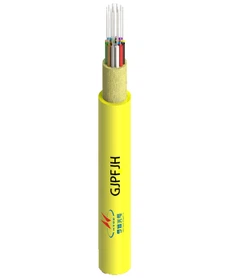
OM2, or Optical Multimode 2, is a type of multimode fiber optic cable that has been a staple in local area networks (LANs) for many years. It features a core diameter of 50 micrometers and is designed to support high - speed data transmission over relatively short distances. The main advantage of multimode fiber is its ability to carry multiple light rays simultaneously, which allows for higher bandwidth compared to single - mode fiber in short - range applications.
Cost - Efficiency in Installation
One of the primary factors when evaluating the cost - effectiveness of a networking solution is the installation cost. OM2 cables are relatively easy to install, especially when compared to some of the newer fiber optic standards. They do not require the same level of precision alignment as single - mode fibers, which reduces the labor time and expertise needed for installation. This means that businesses can save on installation costs, especially in smaller - scale projects where the network infrastructure is not overly complex.
Another aspect of installation cost is the compatibility with existing infrastructure. Many older buildings and LANs already have OM2 cables installed. Upgrading or expanding the network using OM2 cables can be a seamless process, as they can easily integrate with the existing equipment. This reduces the need for extensive rewiring and the associated costs.
Bandwidth and Performance
When it comes to bandwidth, OM2 cables have a limitation compared to newer multimode standards such as Multimode fiber om3, OM4, and OM5. OM2 is typically rated for speeds up to 1 Gigabit per second (Gbps) over distances of up to 550 meters. While this may seem insufficient for large - scale data centers or high - speed enterprise networks, it is more than adequate for many small and medium - sized businesses.
For example, in a small office environment where the network traffic mainly consists of email, web browsing, and basic file sharing, OM2 can provide reliable performance at a fraction of the cost of upgrading to a higher - end multimode fiber. The key is to match the network requirements with the capabilities of the fiber optic cable. If the business does not anticipate a significant increase in data traffic in the near future, OM2 can be a cost - effective choice.
Long - Term Cost Considerations
In addition to the initial installation and performance, long - term costs are also an important factor in determining cost - effectiveness. OM2 cables are generally more affordable than their newer counterparts. This means that businesses can save on the upfront cost of purchasing the cables. Moreover, the maintenance cost of OM2 is relatively low. Since it has been around for a long time, there is a large pool of technicians who are familiar with its installation and troubleshooting. Replacement parts are also readily available, which further reduces the maintenance cost.
However, it's important to note that as technology evolves, the long - term viability of OM2 may be limited. If a business plans to expand its network significantly or if there is a high likelihood of a future increase in data traffic, investing in a more advanced multimode fiber such as OM4 or OM5 may be a better long - term strategy. But for businesses with stable network requirements, OM2 can continue to provide a cost - effective solution for many years to come.
Comparison with Other Multimode Fibers
Let's compare OM2 with Multimode fiber om3, OM4, and OM5. OM3 and OM4 offer higher bandwidth capabilities, with OM3 supporting speeds up to 10 Gbps over distances of up to 300 meters and OM4 supporting speeds up to 40/100 Gbps over shorter distances. OM5, on the other hand, is designed for wavelength - division multiplexing (WDM) applications and can support multiple wavelengths, providing even higher bandwidth.


While these newer standards offer superior performance, they also come with a higher price tag. The cost of OM3, OM4, and OM5 cables, as well as the associated transceivers and equipment, is significantly higher than that of OM2. For businesses that do not require the high - speed capabilities of these newer fibers, investing in them would be an unnecessary expense.
Real - World Applications
To illustrate the cost - effectiveness of OM2, let's look at some real - world applications. In a small retail store, the network requirements are relatively simple. The point - of - sale systems, inventory management software, and security cameras do not generate a large amount of data traffic. OM2 cables can easily handle the data transfer needs of these systems, and the installation and maintenance costs are minimal.
In a school or educational institution, where the network is mainly used for student access to online resources, email, and basic administrative tasks, OM2 can also be a cost - effective solution. The existing network infrastructure in many schools may already be based on OM2, and upgrading to a higher - end fiber may not be justifiable from a cost perspective.
Conclusion
In conclusion, whether OM2 is a cost - effective solution depends on the specific needs and circumstances of the business. For small and medium - sized businesses with stable network requirements and limited budgets, OM2 offers a reliable and affordable option. Its ease of installation, compatibility with existing infrastructure, and relatively low maintenance cost make it an attractive choice.
However, businesses that anticipate significant growth in data traffic or require high - speed networks for advanced applications may need to consider upgrading to newer multimode fibers such as OM3, OM4, or OM5. The key is to conduct a thorough assessment of the network requirements and weigh the costs and benefits of different fiber optic solutions.
If you're interested in learning more about how OM2 can meet your networking needs or if you're considering a network upgrade, I'd be more than happy to discuss your options. Contact me to start a conversation about your specific requirements and explore the best cost - effective solutions for your business.
References
- "Fiber Optic Cabling Installation Best Practices", Telecommunications Industry Association (TIA)
- "Multimode Fiber Optic Standards Overview", Institute of Electrical and Electronics Engineers (IEEE)