





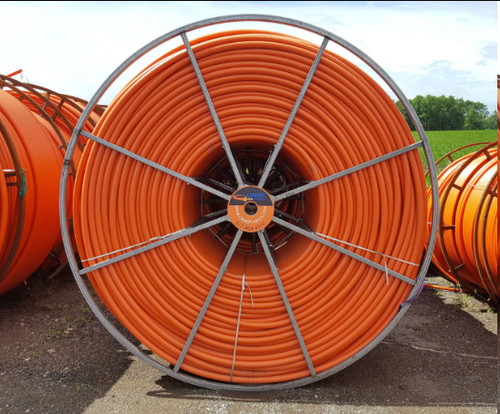
Which Underground Conduit for Fiber Optic Cable Suits Projects?
The choice of underground conduit depends on your installation method, environment, and budget. HDPE (high-density polyethylene) dominates long-distance underground projects due to flexibility and durability, while PVC works for shorter, simpler runs where cost matters more than adaptability.
Material Selection: HDPE vs PVC Decision Framework
HDPE conduit has captured telecom professionals' preference for a reason: it handles what underground environments throw at it. The material withstands temperature swings from -40°F to 194°F without becoming brittle, and its flexibility means fewer connection points over long runs. Industry data shows HDPE maintains integrity through 20+ years of UV exposure, compared to PVC's three-year degradation timeline when exposed to sunlight.
PVC conduit costs roughly 15-30% less per foot than HDPE but comes with trade-offs. The material becomes fragile in cold weather and cracks under stress that HDPE would absorb. For straightforward installations under 300 feet with easily accessible pathways, PVC delivers adequate protection at a lower price point. Once you factor in complex routing or harsh conditions, the initial savings disappear.
The flexibility difference matters during installation. HDPE's tight bending radius allows navigation around obstacles without additional fittings, which reduces both material costs and potential failure points. PVC requires couplings at every direction change, adding time and creating weak spots. Telecommunications contractors report that HDPE installations proceed 40% faster than PVC on projects requiring multiple directional changes.
Size Specifications for Different Project Scales
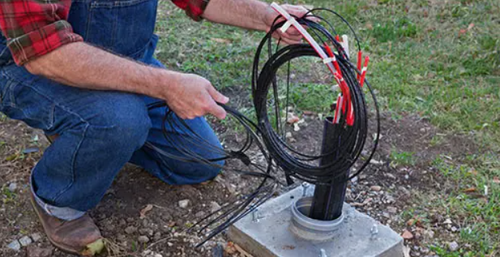
Residential fiber drops under 300 feet typically use 1.5-inch Schedule 40 conduit. This diameter accommodates standard fiber cable with room for the 40% fill ratio that industry guidelines recommend. When distance exceeds 300 feet, you need 2-inch conduit to reduce pulling tension and prevent cable damage.
The fill ratio calculation matters more than installers realize. Divide the cable's outer diameter by the conduit's inner diameter-keeping this under 40% initially allows for future additions without new trenching. Municipal projects often specify 70-80% maximum fill for fiber innerduct, but starting lower saves costly upgrades later.
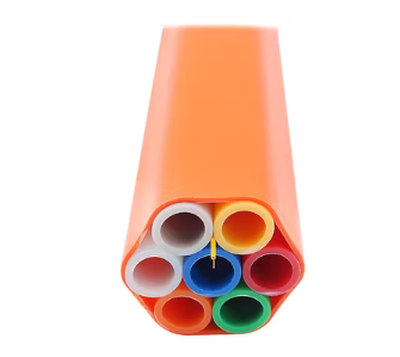
Commercial installations requiring multiple cable runs benefit from 3-4 inch conduit systems with innerduct subdivisions. A 4-inch conduit can house six 1-inch innerducts, each protecting separate fiber runs. This organization simplifies troubleshooting and allows staged deployment as bandwidth needs grow.
Pull length limitations force size decisions. Beyond 400 feet, you need intermediate pull boxes or pedestals regardless of conduit diameter. The combination of distance, bends, and friction creates pulling tensions that exceed cable specifications. Pre-lubrication reduces required force by 40% or more, but physics still limits practical pull distances.
Installation Method Impact on Conduit Choice
Directional boring demands HDPE conduit exclusively. The drilling process subjects conduit to lateral compression and pulling forces exceeding 600 pounds-stresses that shatter PVC. HDPE's ductility allows it to deform slightly under pressure then return to shape, while PVC fractures. Boring contractors won't warranty PVC installations for this reason.
Trenching opens more material options since conduit experiences less stress during placement. Both HDPE and PVC work in traditional trenches, though HDPE still offers advantages. Its flexibility means longer continuous runs with fewer joints, and the material resists chemical exposure from soil contaminants that degrade PVC over time.
Microtrenching-cutting narrow 1-2 inch wide trenches at 12-24 inch depths-has gained traction in urban areas. This method deploys fiber quickly with minimal disruption but exposes conduit to more surface activity than deep burial. HDPE's impact resistance becomes critical here. Studies document that shallow-buried PVC cracks from repeated surface loads, while HDPE absorbs the stress.
Plowing works best with specialized direct-burial cable rather than conduit systems. The plow slices through soil and simultaneously lays cable at 24-36 inch depths. When conduit is required with plow installation, only HDPE's flexibility handles the dynamic forces. The conduit must bend around rocks and roots while being pulled through soil at speed.
Environmental Conditions That Drive Material Decisions
Clay soil creates different challenges than sandy or rocky terrain. Clay's expansion and contraction with moisture changes exerts continuous pressure on buried conduit. HDPE flexes with soil movement; PVC develops stress fractures that eventually breach. Fiber installations in clay-heavy regions show 3x longer service life with HDPE versus PVC.
Chemical exposure matters in industrial zones and agricultural areas. Fertilizers, pesticides, and industrial runoff contain compounds that attack PVC's chemical bonds. HDPE resists these exposures because its molecular structure doesn't react with most soil chemicals. Areas with known contamination require HDPE or specialized corrosion-resistant PVC formulations that cost more than standard HDPE.
Temperature cycling poses particular challenges. Regions experiencing freezing winters and hot summers put conduit through constant expansion-contraction cycles. PVC becomes brittle below 32°F and can crack from frost heaving. HDPE maintains flexibility down to -40°F, absorbing ground movement rather than fracturing. Northern installations universally specify HDPE for this reason.
Coastal installations face salt exposure and shifting soil conditions. Saltwater intrusion corrodes metal components and degrades certain plastics. HDPE shows excellent resistance to salt, sand, and marine environments. The material's hydrophobic nature prevents moisture absorption that causes material breakdown. PVC works in coastal areas but requires thicker walls and protective coatings.
Metal Conduit Applications and Limitations
Steel and aluminum conduit serve specific niches where fiber needs maximum physical protection. Data centers, industrial facilities, and high-security installations use metal conduit for crush resistance and EMI shielding. The material costs 3-5x more than HDPE but provides unmatched impact protection.
Metal conduit installation requires specialized skills. You must properly ground and bond all metallic components even though fiber itself doesn't conduct electricity. This grounding protects against induced currents from nearby power lines. Improper grounding creates safety hazards and can damage network equipment.
The weight and rigidity of metal conduit limits its application. A 100-foot run of 2-inch steel conduit weighs roughly 200 pounds versus 25 pounds for HDPE. This weight difference multiplies labor costs and requires heavier equipment. Metal also requires threaded fittings at every connection, adding complexity that plastic snap-fit or solvent-welded joints avoid.
Corrosion remains metal conduit's primary weakness. Underground moisture attacks steel despite galvanization, especially where protective coatings scratch during installation. Stainless steel resists corrosion but costs 8-10x more than HDPE. Most outdoor fiber installations avoid metal entirely unless specific threats-like vehicle traffic or construction activity-justify the expense.
Project-Specific Selection Framework
Municipal fiber networks spanning miles need HDPE's durability and flexibility. Cities installing smart city infrastructure report average HDPE conduit life exceeding 50 years. The material handles repeated freeze-thaw cycles, resists tree root intrusion, and maintains integrity despite soil chemistry variations across long routes.
Short residential drops under 200 feet can use PVC when budget constraints dominate and installation conditions allow. A homeowner connecting a detached garage to main house internet rarely needs HDPE's advanced properties. PVC delivers adequate protection at lower cost for this application.
Commercial campus installations with multiple buildings benefit from oversized HDPE conduit systems. Installing 4-inch conduit today allows pulling additional fiber later without excavation. The incremental cost of larger HDPE versus smaller PVC becomes negligible when amortized across decades of use and avoided future trenching expenses.
Industrial facilities near heavy equipment specify rigid metal conduit or fiber-reinforced HDPE. Standard conduit fails under point loads from forklifts and machinery. Specialized heavy-duty HDPE with thicker walls costs more but prevents the service disruptions that occur when equipment crushes standard conduit.
Cost Analysis Beyond Material Price
Material costs represent roughly 30% of total underground fiber installation expenses. HDPE conduit runs $0.70-1.50 per foot depending on diameter, while comparable PVC costs $0.50-1.00 per foot. This 20-40% price difference shrinks to 5-10% when factoring total project costs including labor, equipment, and restoration.
Labor efficiency favors HDPE despite higher material costs. The reduced joint count and easier installation cuts field time by 25-40% on complex projects. An installer can place 600 feet of HDPE daily using directional boring versus 100 feet with traditional PVC trenching. This efficiency matters more than material savings on large projects.
Maintenance costs over the system's life reveal HDPE's value. Repair incidents occur 60% less frequently with HDPE installations compared to PVC, according to telecom operators' maintenance records. Each repair costs $15,000-20,000 including emergency response, excavation, splice work, and service level agreement penalties. Avoiding even one repair recoups HDPE's premium.
Permit and restoration expenses scale with disruption. Directional boring using HDPE costs more upfront than trenching but eliminates landscape restoration and pavement repair. A $10,000 boring project often beats a $7,000 trenching project once you add $5,000 in restoration costs. Urban installations with strict permitting favor boring plus HDPE for this reason.
Standards and Code Requirements
The National Electric Code doesn't mandate conduit for fiber cable unless it contains metallic components. However, local building codes frequently exceed NEC minimums. Many jurisdictions require Schedule 40 conduit for all underground telecommunications infrastructure regardless of cable type.
Depth requirements vary by location and authority. Standard burial ranges from 18-36 inches for most applications, increasing to 48 inches along highways and 60 inches at stream crossings. Conduit must withstand soil pressure at specified depths plus surface loads from traffic or equipment.
Fill ratio guidelines come from TIA/EIA-569 standards for commercial buildings. The 40% initial fill limit allows for adds and changes without exceeding the 70% maximum that prevents cable damage during pulls. Residential installations sometimes ignore these limits, causing problems during service upgrades.
Tracer wire requirements apply to non-metallic conduit. Installing 12-16 gauge coated wire above the conduit aids future location and prevents accidental damage during excavation. Some jurisdictions require conductive marker tape in addition to tracer wire for redundant locate capability.
Frequently Asked Questions
Can I use PVC conduit for directional boring installations?
No. Directional boring generates lateral forces and pulling tensions that exceed PVC's structural limits. The conduit will crack or shatter during installation. Every directional boring application requires HDPE conduit.
How long does HDPE conduit last underground?
Properly installed HDPE conduit maintains structural integrity for 50+ years. The material resists chemical degradation, doesn't corrode, and handles ground movement without fracturing. Some telecommunications networks operate on HDPE conduit installed in the 1970s.
What's the maximum distance I can pull fiber through conduit?
Distance depends on conduit size, cable diameter, number of bends, and lubrication. General limits range from 300-600 feet between pull points. Beyond this, friction and tensile stress risk damaging fiber cable. Install pull boxes every 400 feet for long runs.
Do I need different conduit for single-mode versus multimode fiber?
No. Conduit selection depends on installation method and environment, not fiber type. Both single-mode and multimode fiber require the same physical protection. Size your conduit based on cable diameter and future capacity needs.
When Pre-Installed Cable Solutions Make Sense
Fiber-in-conduit (FIC) products combine cable and conduit during manufacturing, eliminating field pulling. These assemblies install 50% faster than traditional methods and reduce installation errors. FIC works best for straightforward runs under 1,000 feet where the factory-terminated length matches field requirements.
The trade-off comes in flexibility. Pre-installed systems lock you into specific cable types and fiber counts. Adding capacity later requires new conduit installation. Traditional empty conduit costs more upfront but allows staged deployment as needs evolve.
Testing becomes simpler with FIC since the manufacturer verifies cable integrity before shipping. Traditional installations require field testing after pulling to confirm no damage occurred. This testing adds time but catches problems before network activation.
Most large-scale municipal and telecom projects still prefer empty conduit. The flexibility to pull different cable types and upgrade capacity without excavation justifies the added installation complexity. Residential drops and small commercial installations increasingly use FIC to reduce labor costs and installation time.
Key Selection Criteria
HDPE conduit: Directional boring, long-distance runs, harsh environments, flexible routing requirements
PVC conduit: Short distances under 300 feet, straight runs, budget-constrained residential projects, accessible pathways
Metal conduit: High-security applications, data centers, extreme physical threat environments, industrial facilities requiring EMI shielding
Size up for future capacity: Installing larger conduit costs little more today but prevents expensive trenching later