





As a fiber optic cable manufacturer, it is essential for us to clearly explain the critical accessory installation process that bridges the gap between "OPGW Cable Installation" and "long-term reliable operation" for OPGW fiber optic: OPGW accessory installation is not merely a matter of "attaching" hardware. It directly determines whether OPGW fibers will be pinched or worn, whether vibration fatigue is suppressed, whether grounding and jumpers remain stable over time, and whether splice closures and spare cables facilitate maintenance while ensuring reliable sealing. Prior to accessory installation, the installed laying fiber optic cable must be temporarily grounded. The threading direction of all bolts and pins on the optical cable ace hardware must align with that of bolts on other grounding hardware.

Pre-Construction Prerequisites
Before OPGW fiber accessory installation, pre-construction prerequisites must be confirmed. These determine whether the project can be executed correctly, whether acceptance criteria can be consistent, and maximize the elimination of potential risk hazards in advance.
To ensure installation quality and consistency, the following conditions must be met before construction:
Line tensioning, sag verification, and clamp position confirmation completed
Temporary grounding and work safety measures confirmed in place
Complete sets of fittings, armor rods, vibration dampers, splice closures, and other accessory tools with traceable batch numbers
Torque tools, measuring tools, and specialized stringing and lifting equipment available
Working environment meets current operational requirements
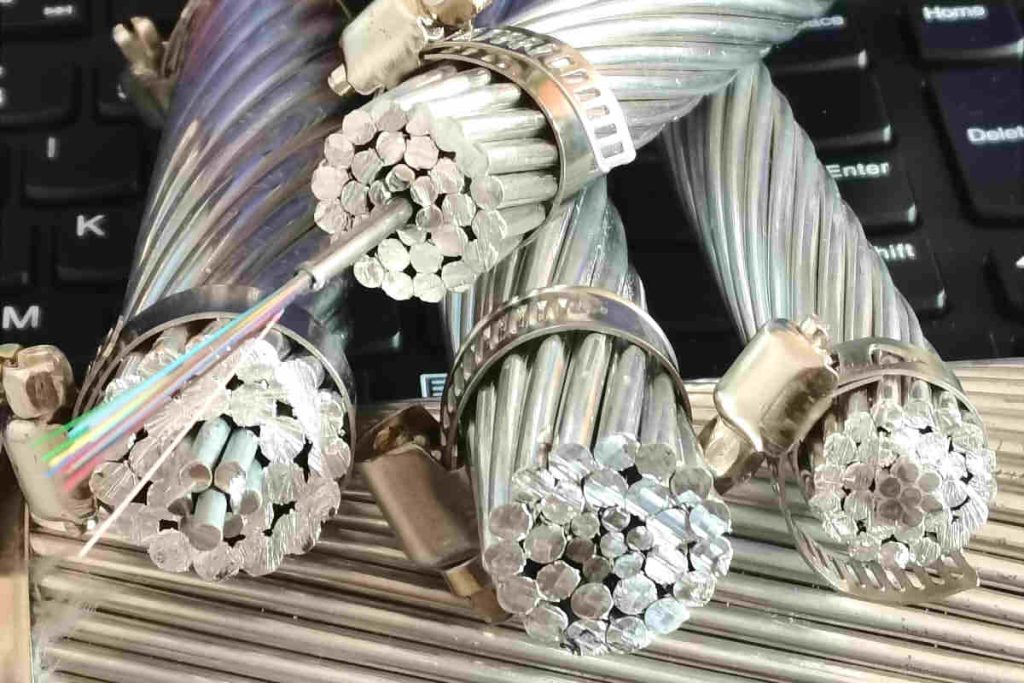
What Does OPGW Accessory Fitting Installation Include?
Understanding OPGW accessory fitting installation is crucial. The long-term reliable operation of OPGW depends not only on the optical fiber cable itself, but more importantly on "how forces are transmitted, how vibrations are controlled, how electrical continuity is maintained, and how splices are sealed" ,all of which are achieved through accessory fitting installation. Even if the cable is excellent, incorrect fitting installation will drag the entire system down to low reliability levels. OPGW accessory fitting installation typically includes the following 7 modules:
• opgw suspension Clamp Installation: Achieves load-bearing and swinging movement, preventing OPGW fiber optic cable from clamping damage and abrasion. The key focus is on proper placement of armor rods or cushions, and whether the clamp forces are correct, ensuring the cable does not develop localized crushing or friction points during long-term wind sway.
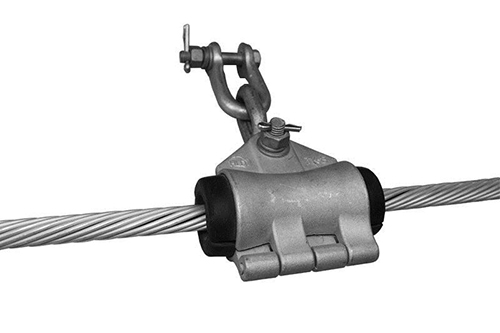
•opgw tension Clamp Installation: Bears tension and transfers forces smoothly. Whether positioning is accurate, and whether armor rod wrapping direction and uniformity meet requirements, prevents cable slippage, loose strands, or stress concentration.

• Vibration Damper (Anti-vibration Device) Installation: Suppresses fatigue caused by aeolian vibration and galloping. Model, quantity, and installation position must comply with design and specifications, ensuring reliable fastening and anti-loosening measures.

• opgw ground wire and jumper cable Installation: Achieves electrical continuity and safe discharge of lightning strikes and induced currents. Attention must be paid to whether connection points conduct reliably, whether anti-corrosion and waterproofing treatments are present, and routing paths must be abrasion-resistant and wind-sway tolerant.

• Down Lead Clamp Installation: Guide and securely support the drop section, control cable routing and bending radius, and prevent the drop section from causing pinching, abrasion, or additional tension on the optical cable due to wind-induced vibration or its own weight.

• Fiber Optic Cable Slack and fiber splice box installation: Ensures splicing, sealing, waterproofing, and future maintenance accessibility. Key points include reserve cable bending radius and fixing methods, splice closure sealing quality and clear labeling for subsequent maintenance.

• OPGW Slack Loop (U-Shaped) Installation Method: Common reserve cable forming method, where bending radius and force release are core considerations. The U-shape dimensions must be reasonable, fixing points should not "constrict," and there should be no interference with structural components, balancing reliability with maintenance friendliness.
Common Failure Risks in OPGW Accessories Installation Procedures
Irregular OPGW accessory installation generally does not show immediate problems but manifests later after operation as abrasion, fatigue, increased attenuation, and grounding hazards. Understanding these risks is crucial for OPGW cable installation quality control. Below we list common OPGW failure risks to better control and reduce risks in advance:
Clamp Damage and Localized Abrasion
Typical Manifestations: OPGW cable outer layer shows indentations and scratches, localized brightening or powder near fittings, and possible strand breakage or sheath damage after a period of operation.
Main Causes: Misaligned or unevenly wrapped armor rods or cushions; improper temporary fixing of pulleys; incorrect OPGW clamp forces or interference with tower materials.
Prevention and Acceptance Points: Check whether armor rods are uniformly in place with aligned centers; no flattening or scratching after loading; anti-abrasion measures at critical contact points. Proper OPGW suspension clamp installation is essential.

Tension Clamp End Slippage, Loose Strands, or Uneven Loading
Typical Manifestations: OPGW tension clamp end displacement, uneven or loose armor rod ends; abnormal noise or fitting heating during operation.
Main Causes: Position color marks not aligned; inconsistent armor rod wrapping direction or pitch; improper end treatment or uneven seating during loading.
Prevention and Acceptance Points: Install according to position marks; check that armor rods don't cross, spacing is uniform, and ends are neat; no slippage after loading, complete anti-loosening measures.
Vibration Device Failure Causing Fatigue Strand Breakage
Typical Manifestations: Exposed after extended operation period, showing strand fatigue near fittings, strand breakage, or triggering larger-scale failures.
Main Causes: Dampers missing, incorrectly installed, or installed backward; significant position deviation; insufficient tightening torque or inadequate anti-loosening.
Prevention and Acceptance Points: Verify model, quantity, and position comply with design or OPGW specifications; check fastening and anti-loosening; spot-check position deviation within allowable range.

Poor Contact in Grounding Wire and Jumpers
Typical Manifestations: Discoloration and corrosion at connection points due to heating; higher risk during thunderstorms or heavy loads; long-term unstable conductivity.
Main Causes: Improper connection surface treatment, inadequate fastening; missing anti-corrosion and waterproofing; galvanic corrosion from dissimilar metal contact; jumper routing too tight or experiencing friction.
Prevention and Acceptance Points: Conductivity check (electrical continuity); anti-corrosion, waterproofing, and anti-loosening at connection points; jumpers have anti-abrasion protection at corners and contact points, routing avoids sharp edges and exposed bolts. Proper OPGW ground wire connection is critical.
Down-lead and Jumper Wind-Sway Abrasion
Typical Manifestations: Down-leads or jumpers abraded at tower material edges, severe cases showing wear-through, breakage, or abnormal grounding.
Main Causes: Too few fixing points or unreasonable spacing; insufficient bending radius; interference with structural components; missing anti-abrasion sleeves and buffers.
Prevention and Acceptance Points: Check fixing point quantity and positions; bending radius meets requirements; no hard contact points within wind-sway range; anti-abrasion components installed at critical friction points. Use appropriate down lead clamp for OPGW applications.

Insufficient Reserve Cable Bending Radius or Over-Tight Binding
Typical Manifestations: Gradual OTDR attenuation increase and fluctuation; maintenance opening reveals reserve cable deformation, indentations, or microbending in the OPGW fiber optic cable.
Main Causes: Reserve cable coiling radius too small; binding points too tight with uneven loading; unrelieved stress on reserve cable and splice closure.
Prevention and Acceptance Points: Reserve cable coiling radius meets standards with uniform fixing; no "constricting" binding; clear stress release on splice closure and reserve cable, no obvious deformation points in appearance. This is particularly important for 24 fiber OPGW and 48 fiber OPGW configurations.
Inadequate Splice Closure Sealing or Water Ingress
Typical Manifestations: Sudden attenuation change, communication interruption; moisture, water accumulation, condensation, or seal ring misalignment when opened.
Main Causes: Missing or improperly assembled sealing components; inadequate cable entry/exit point treatment; installation location subject to water flow erosion or long-term water accumulation; irregular numbering and maintenance causing errors during re-opening.
Prevention and Acceptance Points: Check seal structure integrity according to procedures; proper cable entry/exit fixing and waterproofing treatment; installation location facilitates maintenance and avoids water accumulation risk; clear labeling with traceable records. Proper OPGW joint box and OPGW splice enclosure installation following the OPGW installation procedure is essential.

Improper U-Type Reserve Cable Dimensions or Interference
Typical Manifestations: U-shape too small causing long-term reserve cable stress; abrasion from interference with tower materials or fittings; insufficient maintenance access space.
Main Causes: Not designed according to bending radius and maintenance space requirements; unreasonable fixing point arrangement; arbitrary field forming.
Prevention and Acceptance Points: U-shape radius and space meet requirements; fixing points both secure and stress-releasing; no interference with structural components.