





Can ADSS Fibre Optic Cable Resist Tension?
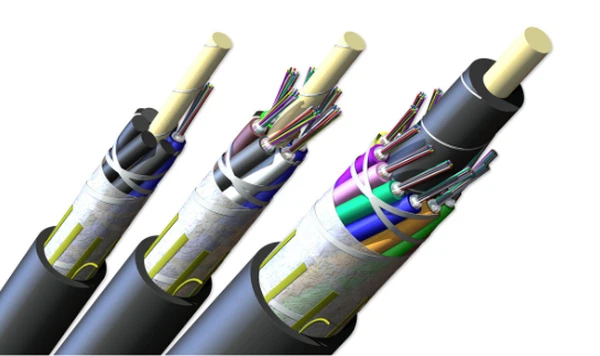
ADSS fibre optic cable is specifically engineered to resist tension, with standard cables supporting 4 to 50 kilonewtons depending on span length and design specifications. The cable's tensile strength comes from aramid fiber yarns (similar to Kevlar) embedded between the inner and outer sheaths, allowing the cable to self-support across spans up to 800 meters without metal support structures.
Understanding how these cables handle tension requires examining three distinct tension states: installation tension (the temporary force during deployment), Maximum Allowable Tension or MAT (the design limit the cable can withstand), and operational tension (the average force during normal service life). Each serves a different purpose in ensuring cable reliability.
The Three-Tier Tension System
ADSS cables operate under a carefully calculated tension hierarchy that protects the delicate optical fibers inside while maintaining proper
sag between poles.
Installation Tension represents the highest force the cable experiences-typically during the pulling phase of deployment. Installation guidelines specify this should not exceed 600 pounds-force (2,700 N) for most ADSS cables, which translates to roughly 50-70% of the cable's MAT rating. This conservative limit exists because dynamic forces during installation-such as passing over sheaves or navigating elevation changes-can create stress concentrations that exceed simple pulling force calculations.
Maximum Allowable Tension (MAT) defines the cable's design threshold under worst-case environmental conditions: maximum ice load, peak wind speed, and lowest expected temperature occurring simultaneously. For a 100-meter span cable, MAT might be 2,700 N, while cables engineered for 400-meter spans could have MAT ratings exceeding 20,000 N. The fiber strain under MAT conditions must remain below 0.05% for ribbon designs and 0.1% for central tube configurations to prevent signal attenuation.
Everyday Design Stress (EDS), sometimes called annual average tension, represents the long-term operational force-typically calculated for no-wind conditions at average annual temperature. EDS determines fatigue life and anti-vibration requirements, usually running at 15-25% of MAT.
This three-tier system allows engineers to balance cable cost against performance. Overbuilding for installation tension alone would create unnecessarily heavy, expensive cables; the tiered approach optimizes material usage while maintaining safety margins.

How Aramid Fibers Create Tensile Strength
The self-supporting capability of ADSS cable stems from aramid fiber yarns-high-performance synthetic fibers with tensile strength comparable to steel but at one-fifth the weight. DuPont's Kevlar, Teijin's Twaron, and Kolon's Heracron are common brands used in cable manufacturing.
These aramid yarns are applied in a helical layer over the cable's inner sheath but beneath the outer protective jacket. For a cable rated at 10 kN, manufacturers might use 24 to 48 individual yarn bundles, each specified in dtex (weight in grams of 10,000 meters). Common denier ratings include 1,610 dtex, 3,200 dtex, and 8,400 dtex-higher numbers indicate thicker, stronger yarns.
The aramid layer's key properties include:
Tensile modulus of 70-112 GPa (gigapascals), providing stiffness under load
Breaking elongation below 4%, meaning minimal stretch before failure
Temperature stability from -40°C to +70°C without significant strength degradation
Dielectric properties, maintaining zero electrical conductivity critical for high-voltage environments
Cable manufacturers calculate the required aramid yarn quantity using span length, cable weight per meter, and expected weather loading. A 200-meter span in a region with heavy ice accumulation might require 30-40% more aramid yarn than the same span in a mild climate, directly impacting cable diameter and cost.
When ADSS Fibre Optic Cable Tension Becomes Dangerous
ADSS fibre optic cables face two primary tension-related failure mechanisms that have plagued utility installations globally: aeolian vibration and installation damage.
Aeolian vibration occurs when steady wind flows perpendicular to the cable, creating alternating vortices on the cable's upper and lower surfaces. These vortices generate oscillating lift forces at frequencies between 3-150 Hz. Because ADSS cables have relatively low mass, high tension, and minimal internal damping, they're particularly susceptible to this phenomenon on spans exceeding 150 meters.
The vibration amplitude might seem small-often just 0.5 to 2 cable diameters-but at the support points where the cable enters suspension clamps, these oscillations create cyclic bending stress. Over months or years, this stress concentration can abrade the outer jacket, compromise the aramid layer, and eventually cause strand breakage. Field failures have been documented after just 6-12 months in high-wind corridors without proper damping.
Spiral vibration dampers (SVDs) provide the solution-flexible rods that grip the cable and dissipate vibrational energy through material hysteresis. Proper damper placement, typically 0.5-1.0 meters from each suspension point, can reduce vibration amplitude by 60-80%. However, research by Karady and colleagues revealed that improperly designed dampers can actually exacerbate another failure mode: dry-band arcing.
Installation damage represents the more immediate threat. Exceeding installation tension limits-even briefly-can cause permanent deformation of the aramid yarns or create microbends in the optical fibers. A 2011 study found that fiber strain above 0.3% during installation created measurable signal loss even after tension was released, suggesting plastic deformation of the glass fibers themselves.
More subtle damage occurs from cable twisting during deployment. If the cable rotates more than one full turn per 100 meters during pulling, the aramid yarns develop helical stress patterns that reduce effective tensile strength by 15-30%. This explains why installation procedures mandate swivels-rotating connectors between the pulling line and cable grip that prevent torsional buildup.
Environmental Forces on Suspended Cables
The tension an ADSS cable must resist varies dramatically with weather conditions, requiring sophisticated engineering calculations during design.
Ice loading can increase cable weight by 300-500% in freezing rain events. A 200-meter span of 12mm diameter cable weighing 0.22 kg/m might support 6mm of radial ice, adding 1.8 kg/m-more than eight times the bare cable weight. This additional mass directly increases cable sag and tension at support points. Manufacturers specify ice thickness assumptions (typically 0-25mm) based on installation region, and miscalculation has led to numerous failures in regions experiencing unexpectedly severe ice storms.
Wind pressure follows the formula: F = 0.613 × V² × D × L (where F is force in newtons, V is wind speed in m/s, D is cable diameter in meters, and L is span length in meters). At 40 m/s wind speed (90 mph), a 15mm cable experiences approximately 37 N of force per meter of span. On a 300-meter span, this translates to 11,100 N of lateral force creating additional tension through the Pythagorean relationship between vertical and horizontal force components.
The combined loading scenario-maximum ice with maximum wind-creates the worst-case design condition. However, these rarely occur simultaneously; ice typically forms in calm conditions, while high winds tend to shed ice accumulation. Standards like NESC (National Electrical Safety Code) provide statistical loading districts that define design combinations for different regions.
Temperature effects add another dimension. Aramid yarns have a negative coefficient of thermal expansion (they contract when heated), opposite to most materials. A 30°C temperature increase might reduce cable length by 0.3‰ (0.03%), which on a 500-meter span equals 15 cm of contraction-potentially increasing tension by 8-12% depending on the cable's elastic modulus.
The Dry-Band Arcing Threat
While not directly a mechanical tension failure, dry-band arcing represents a critical interaction between electrical environment and mechanical stress that deserves attention.
ADSS cables installed on high-voltage transmission lines (above 110 kV) experience capacitive coupling with the phase conductors. In polluted environments-particularly coastal areas with salt spray or industrial zones-airborne contaminants create a conductive layer on the cable surface when wetted by fog or light rain.
As this layer dries unevenly, typically near the grounded support structures, high-resistance "dry bands" form. The voltage drop across these dry bands can reach 7-14 kV, sufficient to initiate electrical arcing. These arcs-though only 2-5 mA in current-generate temperatures exceeding 2,000°C in localized spots, degrading the polyethylene jacket.
Research at Arizona State University found that repeated arcing creates carbonized tracks that progressively deepen, reaching the aramid strength member layer within 65-330 cycles depending on voltage levels. Once the aramid is exposed, its dielectric properties degrade and mechanical strength drops precipitously-failures have occurred within 2-3 years on heavily polluted 220 kV lines.
The connection to tension: higher operational tension increases the mechanical stress state in the jacket material, making it more susceptible to crack propagation from arc-damaged zones. This creates a synergistic failure mechanism where electrical damage initiates cracks and mechanical tension propagates them.
Anti-tracking (AT) jackets using specially formulated polymers with higher tracking resistance (≥25 kV electric field strength) provide protection on high-voltage lines. Alternatively, some utilities have successfully implemented semiconductive rods-50-meter resistive elements that control current distribution and limit arc formation. However, these solutions add 15-30% to cable cost.
Design Variables That Determine ADSS Fibre Optic Cable Tension Capacity
Specifying an ADSS fibre optic cable for a particular installation requires balancing multiple interdependent factors.
Span length is the primary driver. Standard offerings typically include:
50-100m spans: 2-4 kN MAT, single jacket, 11-13mm diameter
100-200m spans: 6-10 kN MAT, single or double jacket, 13-15mm diameter
200-400m spans: 12-20 kN MAT, double jacket, 15-18mm diameter
400-700m spans: 25-50 kN MAT, double jacket, 18-22mm diameter
Longer spans require proportionally more aramid yarn, increasing both cable diameter and weight-which in turn increases wind and ice loading, necessitating even more strength in a reinforcing feedback loop.
Fiber count influences cable core diameter. Manufacturers typically use 12 fibers per buffer tube for cables up to 144 fibers, then switch to 4 fibers per tube for higher counts to maintain manageable cable diameter. A 288-fiber cable requires approximately 72 buffer tubes arranged in a complex stranding pattern, creating an 18-20mm core before aramid application.
Jacket selection between standard polyethylene (PE) and anti-tracking (AT) formulations affects weight, cost, and electrical performance. AT jackets typically add 1-2mm to cable diameter and 10-15% to weight, requiring corresponding increases in aramid yarn to maintain the same span capability.
Climate zone dictates ice and wind loading assumptions. The NESC defines heavy, medium, and light loading districts:
Heavy: 12.5mm ice, 18 m/s wind, -20°C
Medium: 6mm ice, 21 m/s wind, -9°C
Light: 0mm ice, 34 m/s wind, 15°C
A cable rated for 300m span in light loading might only support 180m in heavy loading due to the additional environmental forces.
Voltage environment primarily affects jacket specification rather than tensile design, but installations above 220 kV require careful electric field strength calculations to determine optimal attachment height on towers. Higher placement reduces field strength but may increase wind exposure-another engineering tradeoff.
Installation Practices That Preserve Strength
Even a properly designed ADSS cable can suffer reduced service life if installation procedures compromise the aramid strength member.
Tension monitoring during deployment uses specialized tensioners with real-time force measurement. The target is 50-70% of MAT, but this must be adjusted for specific conditions. On routes with significant elevation changes, installers may need to reduce target tension to 40-50% of MAT on uphill sections to avoid exceeding limits at low points.
Pulling speed should not exceed 20 meters per minute. Faster rates create dynamic loading as the cable accelerates and decelerates through direction changes, potentially generating force spikes 150-200% of the steady-state pulling tension. This speed limit frustrates installation crews accustomed to electrical conductor installation, where 40-50 m/min is common.
Minimum bend radius rules apply throughout installation. Dynamic (during deployment) minimum is 25× cable diameter; static (permanent installation) is 15× cable diameter. For a 14mm cable, this means no bends tighter than 350mm during pulling and 210mm in final clamp configuration. Violations create stress concentrations in the aramid layer and can induce microbending losses in the optical fibers.
Swivel deployment prevents cable twist. A double-swivel assembly-one at the grip attachment point and another 2-3 meters behind-provides redundancy. The "flag test" validates proper swivel function: attach a fabric flag to the cable behind the swivel and observe it through each sheave passage. The flag should maintain constant orientation; if it begins rotating, the swivel has failed and must be serviced immediately.
Sag adjustment after installation ensures proper tension distribution across multiple spans. In continuous multi-span installations (7-15 poles), installers select two "observation spans" near the ends of the section, measure sag precisely, and adjust tension to match calculated values from sag-tension tables. This ensures no individual span is over-tensioned while others are under-tensioned-a condition that can lead to jacket damage at high-tension spans and excessive galloping at low-tension spans.
Comparing ADSS Tensile Performance
ADSS sits in a unique position among aerial fiber cable technologies, each with distinct tension characteristics.
Figure-8 cable includes an integral steel messenger wire, typically 2.5-3.5mm diameter, making the cable structure asymmetric. This design supports spans up to 150 meters with messenger breaking strength of 8-12 kN. The advantage: simpler installation using standard electrical conductor techniques. The disadvantage: the steel messenger creates electrical conductivity issues near high-voltage lines and requires bonding/grounding.
OPGW (Optical Ground Wire) replaces the overhead ground conductor on transmission towers with a hybrid cable containing optical fibers in a central tube surrounded by aluminum and steel stranding. Breaking strength ranges from 40-180 kN for spans up to 800 meters. While OPGW offers superior mechanical performance, it costs 3-5× more than ADSS and requires power outages for installation on existing lines.
Lashed aerial cable uses standard loose-tube cable helically wrapped to a messenger wire with steel lashing wire. The messenger provides all tensile support; the fiber cable experiences minimal tension. This allows use of less expensive cable designs but increases installation labor by 40-60% and creates a bulkier aerial profile.
ADSS offers the optimal balance for utility applications: sufficient span capability for 80% of distribution and transmission line geometries, installation without power outages, zero electrical conductivity concerns, and life-cycle costs 30-40% below OPGW alternatives. The tension limitations (typically not suitable for spans exceeding 800m without custom engineering) represent the primary design constraint.
Frequently Asked Questions
What happens if ADSS cable tension is exceeded during installation?
Exceeding the specified installation tension (typically 600 lbf or 2,700 N for standard cables) can cause permanent deformation of the aramid strength member and create microbends in the optical fibers. Even brief overstress-lasting just seconds as the cable negotiates a difficult section-may induce measurable signal loss. Laboratory testing shows fiber strain above 0.3% can damage the glass structure irreversibly. In practical terms, damaged cable may pass initial testing but develop accelerated aging and unexpected failures within 2-5 years rather than the expected 25-30 year service life.
How do you calculate the right ADSS cable for a specific span?
Cable selection requires four key inputs: maximum span length, representative span (average of the section), environmental loading (ice thickness, wind speed, temperature range), and voltage level if installing near power lines. Manufacturers provide sag-tension tables showing the relationship between span, sag, and tension for their cable models under different loading conditions. Engineers match the worst-case span and loading to a cable whose Maximum Allowable Tension (MAT) provides adequate safety margin-typically designing for actual operational tension not exceeding 60-70% of MAT. For spans above 300 meters, vibration analysis becomes critical and may require custom cable specifications.
Can ADSS cable strength degrade over time?
The aramid strength member itself experiences minimal degradation if protected from UV exposure and moisture by intact jacketing. However, three mechanisms can reduce effective cable strength over time: dry-band arcing damage on high-voltage lines (creating carbon tracks that weaken the jacket), aeolian vibration without adequate damping (causing fatigue failures at attachment points), and UV degradation if the jacket is improperly formulated. Properly specified and installed ADSS maintains 90-95% of its original tensile strength after 20-25 years. Annual infrared inspection can detect hot spots from dry-band arcing before catastrophic failure occurs.
Why do some ADSS cables have double jackets?
Double jacket designs serve two primary functions: increasing weather loading capacity for longer spans (200-700m) and providing redundant protection in harsh environments. The inner jacket, typically 1-2mm polyethylene, encapsulates the aramid layer and provides initial water blocking. The outer jacket, another 1.5-3mm layer, bears primary UV exposure and ice/wind loading. This construction increases cable diameter by 2-4mm and weight by 15-25%, requiring proportionally stronger aramid reinforcement, but extends service life in coastal, industrial, or high-altitude installations where single jacket cables might degrade within 8-12 years.
Understanding Tension in Context
The ability of ADSS fibre optic cable to resist tension depends on careful engineering that balances span requirements, environmental forces, and cost constraints. The aramid fiber strength member provides tensile capacity from 4 to 50 kilonewtons while maintaining the all-dielectric properties essential for high-voltage environments.
The three-tier tension system-installation, maximum allowable, and operational-ensures the cable operates well within safety limits throughout its service life. Failures typically result not from inadequate design but from installation errors (excessive pulling force or cable twist), environmental miscalculation (underestimating ice loading or wind exposure), or electrical degradation (dry-band arcing on high-voltage lines).
For installations following manufacturer specifications, using appropriate hardware, and matching cable strength to span and loading requirements, ADSS provides reliable self-supporting performance for 25-30 years. The technology has matured significantly since early utility deployments in the 1990s, with improved jacket formulations, better understanding of vibration mechanisms, and refined installation techniques addressing historical failure modes.
The key insight: ADSS fibre optic cable tension resistance isn't a simple yes/no question but rather a system of interdependent variables that must be properly specified, installed, and maintained to achieve the cable's full design potential.