

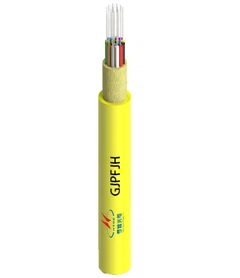


Hey there! As a supplier of multimode fiber, I often get asked about the vibration resistance of multimode fiber. So, I thought I'd write this blog to break it down for you.
Understanding Multimode Fiber Basics
First off, let's quickly go over what multimode fiber is. Multimode fiber is a type of optical fiber that allows multiple light rays (modes) to travel through it simultaneously. It's commonly used in local area networks (LANs), data centers, and other short - distance communication applications. There are different types of multimode fiber, like OM2, OM4, and OM5, each with its own characteristics and performance capabilities.
Why Vibration Resistance Matters
Vibration resistance is a crucial factor when it comes to multimode fiber. In real - world applications, fibers can be exposed to various levels of vibration. For example, in industrial settings, machinery can cause continuous vibrations. In transportation systems like trains or airplanes, the movement generates vibrations as well. If the multimode fiber isn't vibration - resistant, these vibrations can lead to signal loss, increased attenuation, and even fiber breakage over time.
How Vibration Affects Multimode Fiber
When a multimode fiber is subjected to vibration, a few things can happen. The light rays traveling through the fiber can be disrupted. Vibration can cause micro - bends in the fiber. These micro - bends are tiny deformations in the fiber's structure that cause some of the light to leak out of the core. As a result, the signal strength decreases, and the quality of the data transmission is affected.
Another issue is that continuous vibration can cause the fiber to fatigue. Just like a piece of metal that weakens over time with repeated bending, the glass or plastic material of the multimode fiber can become more brittle and prone to breakage. This is especially a concern in high - vibration environments where the fiber is constantly jostled.
Factors Affecting Vibration Resistance
There are several factors that determine the vibration resistance of multimode fiber.
Fiber Material
The material of the fiber plays a big role. Most multimode fibers are made of either glass or plastic. Glass fibers generally have better vibration resistance compared to plastic fibers. Glass is a more rigid and stable material, which can withstand vibrations better without significant deformation. Plastic fibers, on the other hand, are more flexible but also more susceptible to damage from vibration.
Fiber Coating
The coating on the fiber is also important. A good quality coating can protect the fiber from external forces, including vibration. The coating acts as a buffer, absorbing some of the energy from the vibrations and preventing it from directly affecting the fiber core. Some coatings are specifically designed to enhance vibration resistance, with properties like high elasticity and shock - absorbing capabilities.
Cable Design
The overall design of the fiber cable matters too. Cables with a loose - tube design, for example, tend to have better vibration resistance. In a loose - tube design, the fibers are placed inside a protective tube with some extra space. This allows the fibers to move slightly within the tube without being directly affected by the external vibrations. Tight - buffered cables, on the other hand, hold the fibers more firmly, which can make them more vulnerable to vibration - induced damage.


Testing Vibration Resistance
Manufacturers use various tests to measure the vibration resistance of multimode fiber. One common test is the random vibration test. In this test, the fiber cable is subjected to random vibrations over a specified frequency range and amplitude. The test measures the change in signal attenuation during the vibration process. If the attenuation increase is within an acceptable range, the fiber is considered to have good vibration resistance.
Another test is the sinusoidal vibration test. In this test, the fiber is vibrated at a single frequency with a specific amplitude. This test helps to simulate a more controlled vibration environment and can identify any resonance frequencies that might cause excessive damage to the fiber.
Vibration Resistance in Different Types of Multimode Fiber
Let's take a look at how different types of multimode fiber perform in terms of vibration resistance.
OM2
OM2 multimode fiber is an older standard. It has a core diameter of 50 microns and is suitable for shorter - distance applications. In terms of vibration resistance, OM2 fiber generally performs well if it has a proper coating and cable design. However, compared to newer standards like OM4 and OM5, it may be slightly more susceptible to vibration - induced signal loss, especially in high - vibration environments.
OM4
OM4 fiber is designed for higher - speed data transmission over longer distances. It has better bandwidth and performance compared to OM2. In terms of vibration resistance, OM4 fiber often has improved characteristics. The manufacturing processes for OM4 fiber are more advanced, and it can better withstand vibrations without significant signal degradation. The use of better - quality materials and coatings also contributes to its enhanced vibration resistance.
OM5
OM5 fiber is the latest addition to the multimode fiber family. It's optimized for wavelength - division multiplexing (WDM) applications. OM5 fiber is engineered to have excellent performance in various environmental conditions, including vibration. It has a more robust design and better resistance to micro - bends, which means it can handle vibrations better than some of the older fiber types.
Ensuring Vibration Resistance in Your Application
If you're planning to use multimode fiber in an environment with vibrations, here are some tips to ensure good performance:
- Choose the Right Fiber Type: Based on your application requirements and the level of vibration in the environment, select the appropriate multimode fiber type. If you're in a high - vibration industrial setting, OM4 or OM5 might be a better choice than OM2.
- Pay Attention to Cable Design: Opt for cables with a loose - tube design or other vibration - resistant cable structures. Make sure the cable has a good quality outer sheath to protect the fibers from external impacts.
- Proper Installation: During installation, avoid sharp bends and kinks in the fiber cable. Secure the cable properly to prevent it from moving around due to vibrations.
Conclusion
In conclusion, vibration resistance is a key aspect of multimode fiber performance. Understanding how vibration affects the fiber, the factors that influence its resistance, and the differences in vibration resistance among different fiber types can help you make informed decisions when selecting multimode fiber for your applications.
As a multimode fiber supplier, I'm here to help you find the best fiber solution for your specific needs. Whether you're setting up a new data center or upgrading an existing network, we have a wide range of high - quality multimode fiber products with excellent vibration resistance. If you're interested in learning more or making a purchase, feel free to reach out to us for a detailed discussion and to start the procurement process.
References
- "Optical Fiber Communications: Principles and Practice" by John M. Senior
- Industry standards and technical documents related to multimode fiber from relevant organizations.