



Hey there! As a supplier of indoor FTTx fiber optic cables, I often get asked about the refractive index of the fiber in these cables. So, I thought I'd write a blog post to share some insights on this topic.
First off, let's understand what the refractive index is. In simple terms, the refractive index of a material is a measure of how much light bends when it passes from one medium to another. It's a fundamental property that plays a crucial role in how light travels through optical fibers.
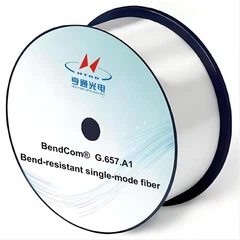
In the context of indoor FTTx fiber optic cables, the refractive index of the fiber is a key factor that affects the cable's performance. The fiber in these cables is typically made of silica glass, which has a refractive index of around 1.46. However, this can vary depending on the specific type of fiber and its manufacturing process.
The refractive index of the fiber is important for a few reasons. One of the main reasons is that it determines the critical angle of the fiber. The critical angle is the angle at which light is totally internally reflected within the fiber. This is what allows light to travel long distances through the fiber without significant loss of signal. A higher refractive index means a smaller critical angle, which can lead to better light confinement and lower signal loss.
Another reason why the refractive index is important is that it affects the dispersion of the fiber. Dispersion is the spreading out of light pulses as they travel through the fiber. This can cause signal distortion and limit the bandwidth of the cable. By carefully controlling the refractive index profile of the fiber, manufacturers can minimize dispersion and improve the cable's performance.
Now, let's talk about how the refractive index of the fiber is measured. There are several methods for measuring the refractive index, but one of the most common methods is the prism coupling method. In this method, a prism is placed on top of the fiber, and light is shone through the prism at a specific angle. By measuring the angle at which the light is refracted, the refractive index of the fiber can be calculated.


As a supplier of indoor FTTx fiber optic cables, we understand the importance of the refractive index and its impact on the cable's performance. That's why we work closely with our manufacturers to ensure that the fibers used in our cables have the right refractive index and refractive index profile. We also conduct rigorous testing on our cables to ensure that they meet the highest standards of quality and performance.
In addition to the refractive index, there are other factors that can affect the performance of indoor FTTx fiber optic cables. These include the type of fiber, the cable construction, and the installation environment. That's why it's important to choose a high-quality cable from a reputable supplier.
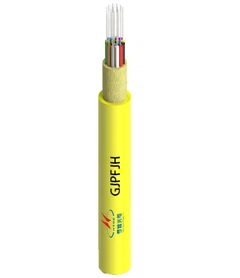
At our company, we offer a wide range of indoor FTTx fiber optic cables to meet the needs of different applications. Some of our popular products include the Round Duplex Optical Cable, the MPO Patch Cord Cable, and the Micro Double Jacket Cable. These cables are designed to provide high-speed, reliable data transmission in indoor environments.
If you're in the market for indoor FTTx fiber optic cables, we'd love to hear from you. We can help you choose the right cable for your application and provide you with all the information you need to make an informed decision. Whether you're a small business or a large enterprise, we have the expertise and experience to meet your needs.
So, if you're interested in learning more about our indoor FTTx fiber optic cables or have any questions about the refractive index or other aspects of fiber optic technology, please don't hesitate to contact us. We're here to help you find the best solution for your networking needs.
References:
- "Fiber Optic Communications Technology" by Gerd Keiser
- "Optical Fiber Telecommunications V: Systems and Impairments" edited by Ivan P. Kaminow and Tingye Li