





Hey there! As a supplier of fiber optic jumpers, I often get asked about the differences between ST and LC fiber optic jumpers. In this blog post, I'll break down the key distinctions to help you understand which one might be the best fit for your needs.
Physical Appearance
Let's start with the physical look of these two types of jumpers. ST fiber optic jumpers have a bayonet-style connector. It's got a round ferrule and a keyed bayonet lock. You insert it into the adapter and then give it a little twist to lock it in place. This locking mechanism makes it quite sturdy, and it's less likely to accidentally come loose during normal use.
On the other hand, LC fiber optic jumpers have a small form-factor plug (SFP) connector. They're much smaller in size compared to ST jumpers. The LC connector uses a push-pull locking mechanism. You simply push it into the adapter, and it clicks into place. To remove it, you just pull on the tab. The compact size of LC jumpers makes them ideal for high-density applications where space is at a premium.
Installation and Ease of Use
When it comes to installation, ST jumpers are relatively straightforward. The bayonet lock gives you a tactile feedback when it's properly locked, so you can be sure it's securely connected. However, the twisting motion can be a bit cumbersome, especially in tight spaces. You need to have enough room to rotate the connector to lock it.
LC jumpers, on the other hand, are a breeze to install. The push-pull mechanism is quick and easy, even in confined areas. You don't need to worry about aligning keys or twisting the connector. This makes them a great choice for data centers and other environments where you might need to make a large number of connections in a short amount of time.
Performance
In terms of performance, both ST and LC jumpers are capable of high-speed data transmission. However, there are some differences.
ST jumpers are typically used in older or legacy systems. They can support speeds of up to 10 Gbps, which is still sufficient for many applications. But they do have a relatively higher insertion loss compared to LC jumpers. Insertion loss is the amount of signal power that is lost when the jumper is connected to the adapter. A higher insertion loss means that the signal strength is reduced, which can affect the overall performance of the network.
LC jumpers, on the other hand, are designed for high-speed, high-density applications. They can support speeds of up to 40 Gbps or even higher in some cases. They have a lower insertion loss, which means that the signal is more efficiently transmitted through the jumper. This makes them a better choice for modern networks that require high bandwidth and low latency.
Cost
Cost is always an important factor when choosing fiber optic jumpers. ST jumpers are generally less expensive than LC jumpers. This is because they are an older technology and are more widely available. If you're on a tight budget and your network doesn't require the highest speeds, ST jumpers might be a good option.
However, if you're building a new network or upgrading an existing one, the higher cost of LC jumpers might be worth it. The better performance and smaller size can lead to long-term savings in terms of space and network efficiency.
Applications
The choice between ST and LC jumpers also depends on the specific application.

ST jumpers are commonly used in older local area networks (LANs), such as those found in schools and small businesses. They're also used in some industrial applications where durability is important. The sturdy bayonet lock makes them less likely to be accidentally disconnected, which is crucial in industrial environments.
LC jumpers are the go-to choice for data centers, telecommunications networks, and high-speed LANs. Their small size allows for more connections in a limited space, and their high performance ensures reliable data transmission. They're also used in fiber-to-the-home (FTTH) applications, where they provide a high-speed connection to individual homes.
Other Related Products
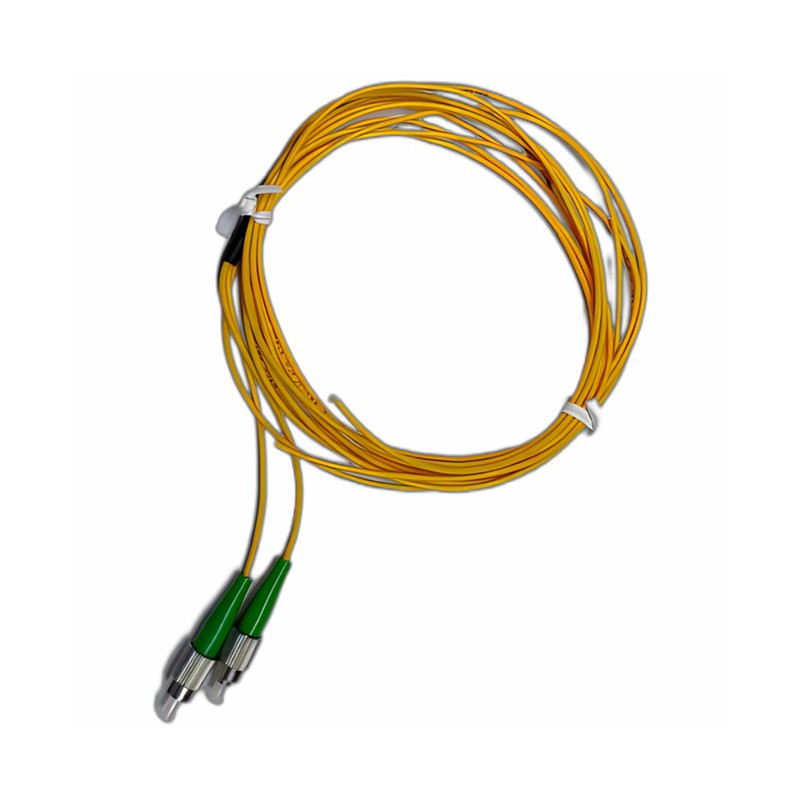
If you're interested in fiber optic jumpers, you might also want to check out some of our other products. For example, we offer FC Duplex Pigtail, which are great for applications that require a duplex connection. We also have LC Pigtail and SC Pigtail, which are available in different configurations to meet your specific needs.
Conclusion
So, there you have it! The main differences between ST and LC fiber optic jumpers come down to physical appearance, installation, performance, cost, and applications. If you're looking for a durable and cost-effective option for an older network, ST jumpers might be the way to go. But if you need high-speed, high-density connections for a modern network, LC jumpers are the better choice.
If you have any questions or are interested in purchasing fiber optic jumpers, feel free to reach out to us. We're here to help you find the right solution for your network.
References
- "Fiber Optic Connectors: Types and Applications." Fiber Optic Association.
- "Understanding Fiber Optic Jumper Cables." TechTarget.