



Hey there! As a supplier of indoor FTTx fiber optic cables, I often get asked about chromatic dispersion. So, let's dive right in and break down what chromatic dispersion is and why it matters for our indoor FTTx fiber optic cables.


What is Chromatic Dispersion?
Chromatic dispersion is basically the spreading out of light pulses as they travel through an optical fiber. You see, light in an optical fiber isn't just one single color or wavelength. It's made up of a bunch of different wavelengths. And each of these wavelengths travels at a slightly different speed through the fiber.
Imagine you're at a track meet. You've got a bunch of runners, and each runner has a different speed. When the race starts, they all start at the same point. But as they run, the faster runners start to pull ahead of the slower ones. By the end of the race, they're all spread out. That's kind of what happens with light in an optical fiber. The different wavelengths of light start together, but as they travel through the fiber, they spread out because they're traveling at different speeds.
This spreading out of light pulses is called chromatic dispersion. And it can cause some problems for our indoor FTTx fiber optic cables.
Why Does Chromatic Dispersion Matter for Indoor FTTx Fiber Optic Cables?
In our indoor FTTx fiber optic cables, we use light to transmit data. The light pulses carry the information from one end of the cable to the other. But when chromatic dispersion occurs, the light pulses spread out. This can make it harder for the receiver at the other end of the cable to tell where one pulse ends and the next one begins.
It's like trying to read a sentence where the letters are all smudged together. You can't tell where one word ends and the next one starts, so it's really hard to understand what the sentence is saying. In the same way, when the light pulses in our fiber optic cables are spread out due to chromatic dispersion, it can be hard for the receiver to accurately read the data that's being transmitted.
This can lead to errors in the data transmission. And in an indoor FTTx network, where we're often dealing with high - speed data transfer for things like internet, TV, and phone services, these errors can be a real problem. They can cause slow internet speeds, dropped calls, and poor - quality video streaming.
How Does Chromatic Dispersion Affect Different Types of Indoor FTTx Fiber Optic Cables?
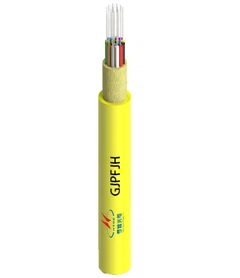
We offer a variety of indoor FTTx fiber optic cables, like the MPO Patch Cord Cable, Micro Double Jacket Cable, and Round Duplex Optical Cable. Each of these cables has different characteristics, and chromatic dispersion can affect them in different ways.
MPO Patch Cord Cable
The MPO Patch Cord Cable is often used for high - density connections in indoor FTTx networks. It can carry a large amount of data at high speeds. But because of the high data rates, it's more susceptible to the effects of chromatic dispersion. The spreading out of light pulses can cause more significant data errors in these cables, especially over longer distances.
Micro Double Jacket Cable
The Micro Double Jacket Cable is designed to be more flexible and compact. It's great for installations where space is limited. However, its smaller size can sometimes lead to increased chromatic dispersion. The light has less room to travel, and the different wavelengths can interact more, causing the pulses to spread out more quickly.
Round Duplex Optical Cable
The Round Duplex Optical Cable is a more traditional option. It's reliable and widely used in indoor FTTx networks. Chromatic dispersion can still affect it, but its design can sometimes help to mitigate the effects. The circular shape of the cable can help to keep the light pulses more organized, reducing the amount of spreading.
How Can We Minimize Chromatic Dispersion in Indoor FTTx Fiber Optic Cables?
As a supplier, we're always looking for ways to minimize the effects of chromatic dispersion in our indoor FTTx fiber optic cables. Here are some of the things we do:
Use Specialized Fiber Materials
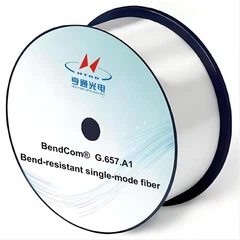
We use fiber materials that are designed to have lower chromatic dispersion. These materials are engineered to make the different wavelengths of light travel at more similar speeds, reducing the amount of spreading.
Optimize Cable Design
We carefully design our cables to reduce the effects of chromatic dispersion. For example, we can adjust the size and shape of the cable to help keep the light pulses more organized. We also use special coatings and buffers to protect the light as it travels through the fiber.
Limit Transmission Distances
Chromatic dispersion gets worse over longer distances. So, we recommend limiting the length of our indoor FTTx fiber optic cables. By keeping the cables shorter, we can reduce the amount of spreading that occurs and improve the accuracy of data transmission.
Conclusion
Chromatic dispersion is an important factor to consider when using indoor FTTx fiber optic cables. It can cause problems with data transmission, but there are ways to minimize its effects. As a supplier, we're committed to providing high - quality indoor FTTx fiber optic cables that are designed to reduce chromatic dispersion and ensure reliable data transmission.
If you're in the market for indoor FTTx fiber optic cables, whether it's the MPO Patch Cord Cable, Micro Double Jacket Cable, or Round Duplex Optical Cable, we'd love to talk to you. We can help you choose the right cable for your needs and ensure that you get the best performance possible. Don't hesitate to reach out for a chat about your requirements and how we can work together to make your indoor FTTx network a success.
References
- Ghatak, Ajoy. "Optical Electronics." Cambridge University Press, 2008.
- Senior, John M. "Optical Fiber Communications: Principles and Practice." Pearson Education, 2012.