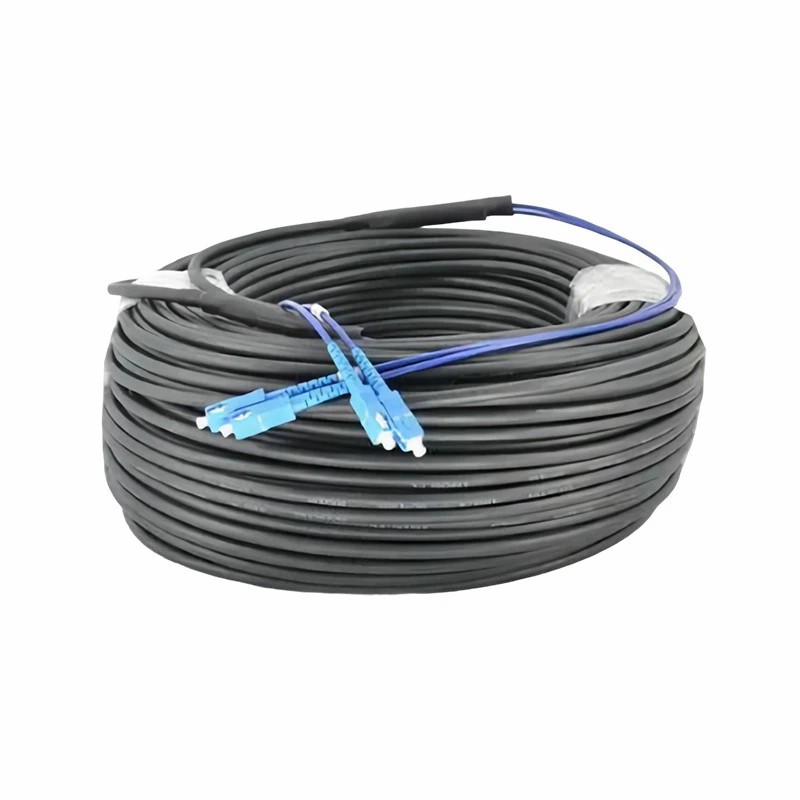
Hey there! As a supplier of fiber optic cable assemblies, I often get asked about how to measure the length of these cables. It's a crucial aspect, especially when it comes to installation, planning, and ensuring you've got the right amount of cable for your project. So, let's dive right into it!
Why Measuring Cable Length Matters
Before we jump into the how-to part, let's quickly talk about why measuring the length of fiber optic cable assemblies is so important. First off, accurate length measurement helps in proper installation. You don't want to end up with a cable that's too short and can't reach its destination, or one that's way too long, creating a messy and inefficient setup.
It also matters for cost - effectiveness. Buying too much cable means you're wasting money, while not having enough might mean additional costs for more cable and potential installation delays. Plus, in some industries, like telecommunications and data centers, precise cable length is required for signal quality and performance.
Tools for Measuring Fiber Optic Cable Assemblies
There are a few different tools you can use to measure the length of fiber optic cable assemblies. Each has its own pros and cons, so let's take a look at them.
Optical Time - Domain Reflectometer (OTDR)
The OTDR is a pretty high - tech and commonly used tool. It works by sending a light pulse into the fiber and then measuring the time it takes for the light to bounce back. Based on the speed of light in the fiber and the time of the return signal, it can calculate the length of the cable.
One of the big advantages of an OTDR is its accuracy. It can measure lengths with a high degree of precision, even over long distances. It can also detect any breaks or faults in the cable along the way. However, OTDRs are quite expensive, and they require some training to use properly.
Visual Fault Locator (VFL)
A VFL is a simpler and more affordable option. It's basically a high - powered LED that sends a visible light into the fiber. You can then visually trace the path of the light along the cable. While it's not as accurate as an OTDR for measuring length, it can give you a rough estimate, especially for shorter cables.
The VFL is easy to use and doesn't require much training. It's also great for quickly finding breaks or bends in the cable. But for precise length measurements, it's not the best choice.
Tape Measure
Yes, a simple tape measure can also be used, especially for shorter fiber optic cable assemblies. If you're dealing with cables that are in a straight line and easily accessible, you can just measure them like you would any other object. However, this method is not suitable for cables that are installed in ducts, walls, or other hard - to - reach places.
Step - by - Step Guide to Measuring with an OTDR
If you've decided to use an OTDR to measure the length of your fiber optic cable assemblies, here's a step - by - step guide on how to do it:
- Prepare the Cable: Make sure the cable is properly connected and there are no loose ends or damaged connectors. Clean the connectors to ensure good light transmission.
- Set Up the OTDR: Turn on the OTDR and select the appropriate settings. You'll need to set the wavelength, pulse width, and range. The wavelength should match the type of fiber you're using, and the range should be set to a value that's slightly larger than the expected length of the cable.
- Connect the OTDR to the Cable: Use a suitable adapter to connect the OTDR to the fiber optic cable assembly. Make sure the connection is secure.
- Take the Measurement: Press the measure button on the OTDR. It will send the light pulse into the fiber and start collecting data. Wait for the measurement to complete.
- Analyze the Results: The OTDR will display a graph called a trace. Look for the end of the cable on the trace. The distance value at this point is the length of the cable. You can also check for any abnormal peaks or dips on the trace, which might indicate a break or fault in the cable.
Measuring with a VFL
If you're using a VFL to measure the length of your cable, here's how you can do it:
- Connect the VFL to the Cable: Attach the VFL to one end of the fiber optic cable assembly.
- Locate the Light: Look for the visible light coming out of the other end of the cable. If the cable is short and visible, you can try to estimate the length by measuring the distance along the cable from the VFL to the point where the light is visible.
- Check for Faults: As you're looking for the light, you can also check for any breaks or bends in the cable. If there's a break, the light might not reach the other end, or it might be significantly dimmed.
Measuring with a Tape Measure
Using a tape measure is the simplest method:
- Straighten the Cable: If possible, straighten the fiber optic cable assembly to get an accurate measurement.
- Measure the Length: Use the tape measure to measure the distance from one end of the cable to the other. Make sure to measure along the center of the cable for the most accurate result.
About Our Fiber Optic Cable Assemblies
At our company, we offer a wide range of high - quality fiber optic cable assemblies. For example, we have the Multi - Fiber SC To SC Cable Assembly, which is great for multi - channel applications. It provides reliable performance and is easy to install.
We also have the SC To SC Duplex Cable Assembly, which is a popular choice for many data center and telecommunications projects. It offers a compact design and excellent signal transmission.
And if you're looking for a multi - fiber option with LC connectors, our LC to LC Multi - Fiber Optic Jumper Cable is a great choice. It's designed to meet the high - speed data transfer requirements of modern networks.
Conclusion
Measuring the length of fiber optic cable assemblies is an important task that requires the right tools and techniques. Whether you choose an OTDR for high - precision measurements, a VFL for a quick estimate, or a tape measure for simple situations, make sure you do it accurately.
If you're in the market for fiber optic cable assemblies, we're here to help. Our products are made with the highest quality materials and undergo strict quality control. We can provide you with the right cables for your project and offer support on installation and measurement. If you're interested in our products, feel free to reach out to us for a quote or to discuss your specific requirements.
References
- "Fiber Optic Test and Measurement Handbook"
- "Optical Fiber Communications Principles and Practice"
So, that's all for now. I hope this blog has been helpful to you. If you have any questions, don't hesitate to ask!