

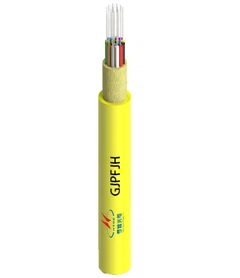


Yo, fellow tech enthusiasts! I'm an OM3 fiber supplier, and today I wanna talk about a real headache in coastal areas: how salt - fog messes with OM3 fiber.
Let's first get a bit of background. OM3 fiber, also known as Multimode fiber om3, is a pretty popular choice for short - distance data transmission in local area networks (LANs). It can handle high - speed data like a champ, making it a go - to for businesses and data centers. But when you place it in coastal areas, things start to get tricky.
Salt - fog is a combination of tiny salt particles and water droplets in the air. Coastal areas are like salt - fog factories because of the proximity to the ocean. The ocean constantly evaporates water, leaving behind salt particles that get carried by the wind and form this pesky salt - fog.
Now, let's dig into how salt - fog affects OM3 fiber. First off, the salt particles in the fog can deposit on the surface of the fiber. OM3 fiber has a very delicate structure, and even a thin layer of salt can cause some serious problems. The salt is hygroscopic, which means it attracts water. When the salt on the fiber absorbs moisture from the air, it forms a conductive layer. This conductive layer can lead to electrical interference, which messes with the signal transmission in the fiber. You might start to notice a drop in signal strength or an increase in bit - error rates.
Another issue is corrosion. Salt is corrosive, and over time, it can eat away at the protective coating of the OM3 fiber. The coating is there to protect the core of the fiber from physical damage and environmental factors. Once the coating is compromised, the core is exposed to the elements. This not only makes the fiber more vulnerable to physical damage but also allows more moisture and contaminants to seep in, further degrading the performance of the fiber.
Let's talk about the impact on the connectors. OM3 fiber connectors are crucial for ensuring a proper connection between different fiber segments. Salt - fog can cause corrosion on the connector surfaces. When the connectors corrode, the contact between the fibers becomes less reliable. This can result in increased insertion loss, which means that more of the signal is lost as it passes through the connector. In some cases, the corrosion can be so bad that the connector fails completely, and you have to replace it.


We also have OM3 - 150, which is a specific type of OM3 fiber. It has its own set of features and applications, but it's not immune to the effects of salt - fog. The same principles apply to OM3 - 150 as they do to regular OM3 fiber. The salt particles can still deposit on its surface, cause corrosion, and disrupt the signal transmission.
Now, you might be wondering how OM3 fiber compares to OM4 in salt - fog conditions. OM4 fiber is designed for higher - speed data transmission and has a better bandwidth than OM3. However, when it comes to salt - fog, it faces similar challenges. The salt particles and moisture can still cause corrosion and interference in OM4 fiber. But OM4 might have a slight edge in terms of performance because of its higher bandwidth, which means it can tolerate a bit more signal degradation before the performance really takes a nosedive.
So, what can we do to protect OM3 fiber in coastal areas? One solution is to use proper enclosures. You can place the fiber in sealed enclosures that prevent the salt - fog from reaching the fiber. These enclosures can be made of materials that are resistant to corrosion, like stainless steel or certain types of plastics. Another option is to regularly clean the fiber and connectors. You can use special cleaning kits to remove the salt deposits and keep the fiber in good condition.
In addition, we can apply protective coatings to the fiber. There are coatings available that can act as a barrier between the fiber and the salt - fog. These coatings can be applied during the manufacturing process or in the field. They help to reduce the amount of salt that deposits on the fiber and also protect it from corrosion.
As an OM3 fiber supplier, I've seen firsthand the impact of salt - fog on our products. That's why we're constantly working on developing better solutions to protect our fibers in harsh coastal environments. We offer a range of products and services to help our customers deal with these challenges.
If you're in a coastal area and are looking for high - quality OM3 fiber that can withstand salt - fog, we've got you covered. Our team of experts can provide you with the best advice on installation, maintenance, and protection of your OM3 fiber. Whether you need OM3 - 150 for a specific project or regular Multimode fiber om3 for your LAN, we can help you make the right choice.
Don't let salt - fog ruin your fiber network. Contact us today to discuss your requirements and let's work together to find the best solution for your needs. We're here to ensure that your OM3 fiber performs at its best, even in the toughest coastal conditions.
References:
- "Optical Fiber Communication Systems" by Govind P. Agrawal
- "Fiber Optics for Dummies" by Greg Shirey