

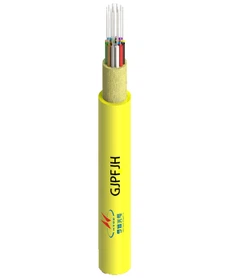


In today's rapidly evolving technological landscape, the choice between fire resistant fiber optic cables and copper cables is a critical decision, especially when it comes to fire safety. As a leading supplier of fire resistant fiber optic cables, I've witnessed firsthand the growing demand for solutions that prioritize safety without compromising on performance. This blog post aims to delve into a comprehensive comparison between these two types of cables in terms of fire safety, highlighting the unique advantages of fire resistant fiber optic cables.
Understanding Fire Safety Requirements
Fire safety in cable systems is governed by a set of strict regulations and standards. These regulations are designed to minimize the risk of fire initiation, propagation, and the release of toxic gases in the event of a fire. For instance, cables used in commercial buildings, hospitals, and data centers must meet specific fire safety criteria to ensure the protection of occupants and critical infrastructure.


Fire Behavior of Copper Cables
Copper cables have been a staple in the telecommunications and electrical industries for decades. However, they present several challenges when it comes to fire safety.
Combustibility
Copper cables typically have a plastic outer sheath, which is highly combustible. In the presence of a fire, this sheath can quickly catch fire and contribute to the spread of flames. The burning plastic releases large amounts of heat, which can further fuel the fire and cause damage to surrounding equipment and structures.
Smoke and Toxic Gas Emission
When copper cables burn, they emit a significant amount of smoke and toxic gases, such as hydrogen chloride. These emissions can pose a serious threat to human health, causing respiratory problems, eye irritation, and even asphyxiation. In enclosed spaces, the accumulation of smoke and toxic gases can make evacuation difficult and increase the risk of fatalities.
Flame Propagation
Copper cables can act as a conduit for flame propagation. The heat generated by the burning sheath can travel along the cable, igniting other cables and materials in its path. This can lead to the rapid spread of fire throughout a building or facility, causing extensive damage and disruption.
Fire Resistance of Fiber Optic Cables
Fire resistant fiber optic cables, on the other hand, are designed to provide enhanced fire safety features.
Non - Combustible Materials
Many fire resistant fiber optic cables are constructed using non - combustible or low - combustible materials. For example, the outer jacket of these cables may be made of fire - retardant polymers or other materials that have a high resistance to ignition. This significantly reduces the risk of the cable catching fire and contributing to flame spread.
Low Smoke and Toxic Gas Emission
Compared to copper cables, fire resistant fiber optic cables emit minimal smoke and toxic gases when exposed to fire. This is crucial in ensuring the safety of occupants during an emergency, as it allows for better visibility and reduces the risk of inhalation of harmful substances.
Limited Flame Propagation
Fire resistant fiber optic cables are engineered to limit flame propagation. They are designed to self - extinguish when the source of ignition is removed, preventing the fire from spreading along the cable. This helps to contain the fire and minimize damage to the surrounding environment.
Specific Types of Fire Resistant Fiber Optic Cables
As a supplier, we offer a range of fire resistant fiber optic cables to meet different application requirements.
Fire Resistant Center Tube Single Jacket Steel Tape Armored Cable
This type of cable features a center tube design with a single jacket and steel tape armor. The steel tape armor provides additional protection against mechanical damage, while the fire - resistant jacket ensures high - level fire safety. It is suitable for both indoor and outdoor applications, such as in buildings, factories, and data centers.
Fire Resistant Multi Tube Double Jacket Double Armored Cable
The multi - tube double jacket double - armored design of this cable offers enhanced protection. The double jacket and double armor provide excellent mechanical strength and fire resistance. It is ideal for applications where high reliability and fire safety are required, such as in critical infrastructure and industrial settings.
Fire Resistant Multi Tube Single Jacket Single Armored Cable
This cable combines the advantages of a multi - tube structure with a single jacket and single armor. It is a cost - effective solution that still provides good fire resistance and mechanical protection. It is commonly used in medium - sized buildings and communication networks.
Other Advantages of Fire Resistant Fiber Optic Cables
Apart from fire safety, fire resistant fiber optic cables offer several other benefits over copper cables.
High Bandwidth
Fiber optic cables can transmit data at much higher speeds and over longer distances compared to copper cables. This makes them ideal for applications that require large amounts of data transfer, such as high - definition video streaming, cloud computing, and 5G networks.
Immunity to Electromagnetic Interference
Unlike copper cables, fiber optic cables are not affected by electromagnetic interference (EMI). This ensures reliable data transmission in environments with high levels of EMI, such as near power lines or in industrial settings.
Lightweight and Flexible
Fiber optic cables are lighter and more flexible than copper cables. This makes them easier to install, especially in tight spaces or complex routing scenarios.
Conclusion and Call to Action
In conclusion, when it comes to fire safety, fire resistant fiber optic cables clearly outperform copper cables. Their non - combustible materials, low smoke and toxic gas emission, and limited flame propagation make them a safer choice for a wide range of applications. Additionally, the high bandwidth, immunity to EMI, and flexibility of fiber optic cables provide significant advantages in terms of performance.
If you are looking for a reliable fire resistant fiber optic cable solution for your project, we are here to help. Our team of experts can provide you with detailed product information and guidance to ensure that you choose the right cable for your specific needs. Contact us today to start a discussion about your procurement requirements and explore how our fire resistant fiber optic cables can enhance the safety and performance of your network.
References
- National Fire Protection Association (NFPA). NFPA 70: National Electrical Code.
- International Electrotechnical Commission (IEC). IEC 60332: Tests on electric and optical fibre cables under fire conditions.
- Telecommunications Industry Association (TIA). TIA - 942: Data Center Telecommunications Infrastructure Standard.