

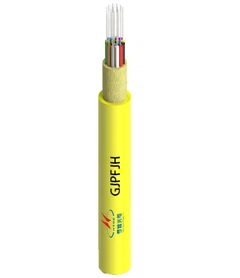


As an OM3 fiber supplier, I often receive inquiries from customers about whether OM3 fiber can be used for CCTV systems. In this blog post, I will delve into the technical aspects of OM3 fiber and its suitability for CCTV applications, providing you with a comprehensive understanding to help you make an informed decision.
Understanding OM3 Fiber
OM3 fiber is a type of multimode fiber optic cable designed to support high - speed data transmission over relatively short distances. It is part of the family of multimode fibers, which also includes OM4 and OM5. The "OM" stands for "Optical Multimode," and the number represents the generation or performance level of the fiber.
OM3 fiber has a core diameter of 50 micrometers and is optimized for 850 - nanometer wavelength operation. It is capable of supporting 10 Gigabit Ethernet transmission up to 300 meters, 40 Gigabit Ethernet up to 100 meters, and 100 Gigabit Ethernet up to 70 meters. These performance characteristics are defined by industry standards such as the TIA - 568 and ISO/IEC 11801.
CCTV Systems Requirements
CCTV (Closed - Circuit Television) systems are used for surveillance purposes in various settings, including commercial buildings, industrial facilities, and residential areas. The requirements of a CCTV system can vary depending on the scale, complexity, and specific application.
Bandwidth
One of the key requirements of a CCTV system is sufficient bandwidth to transmit high - quality video signals. With the increasing popularity of high - definition (HD) and ultra - high - definition (UHD) cameras, the demand for bandwidth has grown significantly. For example, a single 1080p camera may require around 4 - 8 Mbps of bandwidth, while a 4K camera can consume up to 20 - 50 Mbps.
Distance
The distance between the cameras and the recording or monitoring equipment is another important factor. In large - scale CCTV installations, cameras may be located hundreds of meters away from the central control room. Therefore, the transmission medium needs to support long - distance communication without significant signal loss.
Reliability
CCTV systems need to operate continuously and reliably to ensure the security and safety of the monitored area. The transmission medium should be able to withstand environmental factors such as temperature, humidity, and electromagnetic interference.
Can OM3 Fiber Meet CCTV System Requirements?
Bandwidth Consideration
In terms of bandwidth, OM3 fiber can easily meet the requirements of most CCTV systems. Even in a large - scale installation with multiple high - definition cameras, the high - speed data transmission capabilities of OM3 fiber are more than sufficient. For example, if you have a system with 10 1080p cameras, the total bandwidth requirement would be around 40 - 80 Mbps, which is well within the capacity of OM3 fiber.
Distance Consideration
The distance limitation of OM3 fiber can be a factor in some CCTV installations. As mentioned earlier, OM3 fiber can support 10 Gigabit Ethernet up to 300 meters. In most cases, this is sufficient for small to medium - scale CCTV systems where the cameras are located relatively close to the control room. However, for large - scale installations where cameras are spread over a large area, additional repeaters or switches may be required to extend the transmission distance.
Reliability Consideration
OM3 fiber offers excellent reliability for CCTV systems. Fiber optic cables are immune to electromagnetic interference, which is a common problem in electrical environments. They are also more resistant to environmental factors such as temperature and humidity compared to copper cables. This makes OM3 fiber a reliable choice for long - term operation in CCTV systems.
Advantages of Using OM3 Fiber in CCTV Systems
High - Speed Transmission
The high - speed data transmission capabilities of OM3 fiber allow for real - time monitoring of CCTV cameras. This is crucial for security applications where immediate response to events is required.


Immunity to Interference
As mentioned earlier, OM3 fiber is immune to electromagnetic interference. This ensures that the video signals transmitted over the fiber are clear and free from distortion, even in areas with high levels of electrical noise.
Future - Proofing
Investing in OM3 fiber for CCTV systems can provide some level of future - proofing. As the demand for higher - resolution video and more cameras increases, the high - bandwidth capabilities of OM3 fiber can accommodate these changes without the need for a complete system upgrade.
Considerations and Limitations
Cost
One of the main considerations when using OM3 fiber in a CCTV system is the cost. Fiber optic cables and associated components such as transceivers and connectors are generally more expensive than copper cables. However, the long - term benefits in terms of performance and reliability may outweigh the initial investment.
Installation Complexity
Installing OM3 fiber requires specialized skills and equipment. The cables need to be carefully installed to avoid damage, and the connectors need to be properly terminated to ensure optimal performance. This may increase the installation cost and time compared to copper cable installations.
Conclusion
In conclusion, OM3 fiber can be a suitable choice for CCTV systems, especially for small to medium - scale installations where the distance between the cameras and the control room is within the range supported by OM3 fiber. Its high - speed transmission capabilities, immunity to interference, and reliability make it a viable option for meeting the bandwidth and performance requirements of modern CCTV systems.
However, it is important to consider the cost and installation complexity before making a decision. If you are planning a large - scale CCTV installation with cameras located over long distances, you may need to evaluate other options such as single - mode fiber or a combination of multimode and single - mode fibers.
If you are interested in using Multimode fiber om3 for your CCTV system, I encourage you to contact me for more information and to discuss your specific requirements. I can provide you with detailed product specifications, installation guidance, and competitive pricing. Let's work together to find the best solution for your CCTV needs.
References
- TIA - 568 Telecommunications Cabling Standard
- ISO/IEC 11801 Information technology - Generic cabling for customer premises