





Hey there! As a supplier of fiber optic jumpers, I often get asked about the insertion loss of these nifty little cables. So, I thought I'd take a moment to break it down for you in plain English.
First off, let's talk about what fiber optic jumpers are. They're basically short lengths of fiber optic cable with connectors on each end. These connectors allow you to link different pieces of fiber optic equipment together, like switches, routers, and servers. You might be familiar with some common types, such as the SC Duplex Pigtail, FC Duplex Pigtail, and LC To LC Fiber Optic Jumper.
Now, onto the main topic: insertion loss. In simple terms, insertion loss is the amount of signal power that's lost when light travels through a fiber optic jumper. Think of it like water flowing through a pipe. If there are any kinks or blockages in the pipe, some of the water will be lost along the way. The same goes for light in a fiber optic cable.
Insertion loss is measured in decibels (dB). A lower dB value means less signal loss, which is generally what you want. For high - quality fiber optic jumpers, the insertion loss is typically very low. In fact, most good - quality jumpers have an insertion loss of less than 0.3 dB for single - mode fibers and less than 0.5 dB for multi - mode fibers.
There are several factors that can affect the insertion loss of a fiber optic jumper. One of the biggest factors is the quality of the connectors. If the connectors are poorly made or not properly polished, they can cause a significant amount of signal loss. The end - face of the connector needs to be smooth and flat so that the light can pass through easily. Any scratches, dirt, or misalignment can lead to increased insertion loss.
Another factor is the type of fiber used. Single - mode fibers generally have lower insertion loss than multi - mode fibers. This is because single - mode fibers are designed to carry light in a single mode, which means less dispersion and less signal loss. Multi - mode fibers, on the other hand, allow light to travel in multiple modes, which can cause more interference and higher insertion loss.
The length of the fiber optic jumper also plays a role. Generally, the longer the jumper, the higher the insertion loss. This is because the light has to travel a greater distance, and there's more opportunity for it to be absorbed or scattered along the way. However, for most typical applications where the jumpers are relatively short (a few meters), the length - related insertion loss is usually negligible.
Bending the fiber optic cable can also increase insertion loss. If the cable is bent too sharply, it can cause the light to leak out of the fiber, resulting in a loss of signal power. That's why it's important to follow the recommended bend radius when installing fiber optic jumpers.
So, why does insertion loss matter? Well, in a fiber optic network, signal strength is crucial. If the insertion loss is too high, the signal may not be strong enough to reach its destination. This can lead to poor network performance, such as slow data transfer speeds, dropped connections, or even complete network failures.
As a supplier, we take great care to ensure that our fiber optic jumpers have low insertion loss. We use high - quality materials and state - of - the - art manufacturing processes to produce jumpers with excellent performance. Our technicians perform rigorous testing on each and every jumper to make sure that it meets the industry standards for insertion loss.

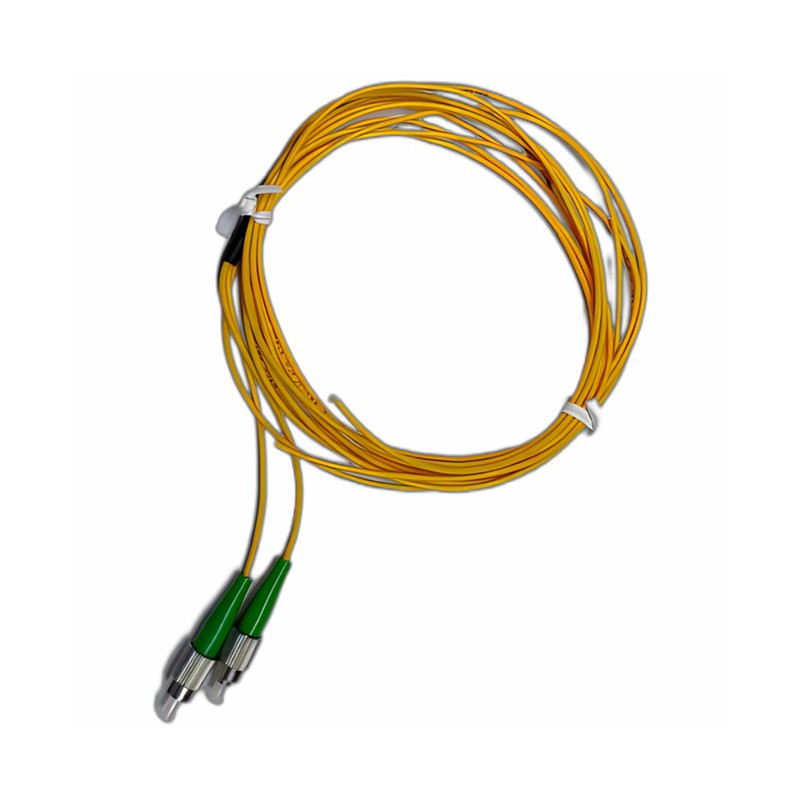
When you're choosing fiber optic jumpers for your network, it's important to pay attention to the insertion loss specifications. Don't just go for the cheapest option, as low - quality jumpers may have high insertion loss, which can end up costing you more in the long run due to network issues.
We offer a wide range of fiber optic jumpers to suit different needs. Whether you need a short LC to LC jumper for a small data center or a long - distance SC duplex pigtail for a telecommunications network, we've got you covered. Our jumpers are not only reliable but also competitively priced.
If you're in the market for fiber optic jumpers and want to learn more about our products or have any questions about insertion loss, don't hesitate to reach out. We're here to help you make the best choice for your network.
In conclusion, insertion loss is a key factor to consider when using fiber optic jumpers. By understanding what it is and what affects it, you can make informed decisions to ensure the smooth operation of your fiber optic network. So, if you're looking for high - quality fiber optic jumpers with low insertion loss, give us a shout. We're ready to assist you with all your fiber optic needs.
References
- Fiber Optic Association (FOA) - "Fiber Optic Connector Basics"
- Telecommunications Industry Association (TIA) - "Standards for Fiber Optic Cables and Connectors"