



Hey there! As a supplier of flat optical cables, I often get asked about the test items of flat optical cables. In this blog post, I'll walk you through the key test items that ensure the quality and performance of these cables.
Optical Performance Tests
Attenuation Test
Attenuation is one of the most crucial parameters in optical cables. It measures the loss of light signal as it travels through the cable. We use an optical time - domain reflectometer (OTDR) for this test. The OTDR sends a short optical pulse into the cable and measures the back - scattered light. By analyzing the intensity of the back - scattered light at different points along the cable, we can determine the attenuation per unit length.
A low attenuation value indicates that the cable can transmit the optical signal over a longer distance without significant loss. For flat optical cables, the acceptable attenuation values vary depending on the type of fiber used (single - mode or multi - mode) and the operating wavelength. Generally, for single - mode fibers at 1310 nm and 1550 nm wavelengths, the attenuation should be very low, usually less than 0.35 dB/km at 1310 nm and less than 0.25 dB/km at 1550 nm.
Bandwidth Test
Bandwidth refers to the range of frequencies that the cable can support for data transmission. In the case of flat optical cables, a high bandwidth means that more data can be transmitted simultaneously. We use a specialized test set to inject a series of optical signals with different frequencies into the cable and measure the output power at each frequency.
The bandwidth of a flat optical cable is typically specified in MHz·km. A higher MHz·km value indicates better high - frequency performance and the ability to support higher - speed data transmission, such as Gigabit Ethernet or even 10 Gigabit Ethernet.
Mechanical Performance Tests
Tensile Test
Flat optical cables need to withstand a certain amount of pulling force during installation and use. In the tensile test, we use a tensile testing machine to gradually apply a pulling force to the cable until it reaches a specified limit or breaks.
The tensile strength of the cable is determined by the maximum force it can withstand before failure. For most flat optical cables, the minimum tensile strength during installation is around 100 - 200 N, and the long - term tensile strength is usually lower, around 50 - 100 N. This test ensures that the cable won't break or suffer from excessive fiber damage when being pulled through conduits or other installation paths.
Bending Test
Bending can cause additional attenuation in optical cables. We conduct bending tests to evaluate how the cable performs under different bending conditions. There are two common types of bending tests: the static bending test and the dynamic bending test.
In the static bending test, the cable is bent around a mandrel of a specific diameter for a certain period, and then the attenuation is measured. In the dynamic bending test, the cable is repeatedly bent and unbent while the attenuation is monitored. For flat optical cables, the bending radius should be within a specified range to avoid excessive signal loss. A typical minimum bending radius for installation is around 10 - 20 times the cable diameter.
Crush Resistance Test
Flat optical cables may be subjected to crushing forces during installation or in some harsh environments. In the crush resistance test, we place the cable between two flat plates and gradually apply a compressive force. The test measures the maximum force that the cable can withstand without significant damage to the fibers inside.
The crush resistance of a flat optical cable is usually specified in N/cm. A higher N/cm value means the cable can better resist crushing forces, which is important for applications where the cable may be installed in areas with potential mechanical stress.
Environmental Performance Tests
Temperature Test
Temperature can have a significant impact on the performance of flat optical cables. We conduct temperature tests to evaluate how the cable behaves in different temperature environments. The cable is placed in a temperature - controlled chamber, and the attenuation is measured at different temperatures, typically ranging from - 20°C to 60°C.
The change in attenuation with temperature should be within an acceptable range. Excessive temperature - induced attenuation can lead to signal degradation and affect the reliability of data transmission. For example, in cold environments, the material of the cable may become more brittle, and in hot environments, the expansion of the cable components may cause micro - bending in the fibers.
Humidity Test
Humidity can also affect the performance of optical cables. Moisture can penetrate the cable jacket and cause corrosion of the metal components (if any) or affect the optical properties of the fibers. In the humidity test, the cable is placed in a high - humidity environment (usually around 95% relative humidity) for a certain period, and then the attenuation and other performance parameters are measured.
The cable should be able to maintain its performance within the specified limits even in high - humidity conditions. Special moisture - resistant materials are often used in the cable construction to improve its humidity resistance.
Structural Integrity Tests
Jacket Integrity Test
The jacket of the flat optical cable protects the internal fibers from mechanical damage, moisture, and other environmental factors. We use visual inspection and electrical tests (if applicable) to check the integrity of the jacket.
Visual inspection can detect obvious defects such as cuts, cracks, or holes in the jacket. Electrical tests can be used to check the insulation resistance of the jacket, which indicates its ability to prevent electrical leakage. A high insulation resistance value ensures that the jacket is intact and can effectively protect the internal components.


Fiber Count and Arrangement Check
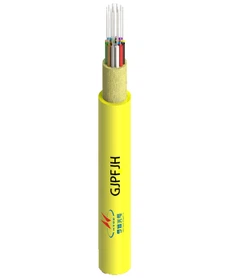
For flat optical cables, it's important to ensure that the correct number of fibers is present and that they are properly arranged. We use microscopic inspection and fiber identification techniques to verify the fiber count and arrangement.
The fiber count should match the specifications of the cable, and the fibers should be evenly spaced and aligned within the cable structure. Any misalignment or incorrect fiber count can lead to problems in splicing, termination, and overall cable performance.
Uni - tube Single Jacket Flat Cable
If you're interested in a specific type of flat optical cable, check out our Uni - tube Single Jacket Flat Cable. This cable is designed with a unique uni - tube structure and a single jacket, which offers excellent mechanical and optical performance. It's suitable for a wide range of applications, from indoor network wiring to some outdoor installations.
Conclusion
As you can see, there are many test items involved in ensuring the quality and performance of flat optical cables. These tests cover optical, mechanical, environmental, and structural aspects to make sure that the cables can meet the requirements of various applications.
If you're in the market for high - quality flat optical cables, I'd love to have a chat with you. Whether you're a network installer, a data center operator, or involved in any other field that requires reliable optical communication, we can provide you with the right flat optical cable solutions. Contact us for more information and let's start a great business partnership!
References
- ITU - T Recommendations for Optical Fiber Cables
- TIA/EIA Standards for Telecommunications Cabling
- IEEE Standards for Ethernet and Optical Communication Systems