



In the ever - evolving landscape of data transmission, the choice of cable plays a pivotal role in determining the efficiency and speed of information transfer. As a supplier of ribbon fibre optic cables, I am often asked about how the data transmission speed of ribbon fibre optic cables compares to other cables. In this blog, I will delve into this topic, exploring the unique features of ribbon fibre optic cables and how they stack up against traditional alternatives.
Understanding Ribbon Fibre Optic Cables
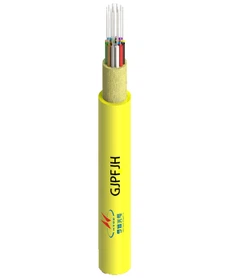
Ribbon fibre optic cables are a type of optical cable that contains multiple optical fibres arranged in a flat, ribbon - like structure. This design allows for a high density of fibres within a relatively small cable diameter. There are different types of ribbon fibre optic cables, such as the Multi Tube Single Jacket Ribbon Cable, Ribbon Slotted Core, and Multi Tube Double Jacket Double Armored Ribbon Cable.
The construction of ribbon fibre optic cables offers several advantages in terms of data transmission. Firstly, the parallel arrangement of fibres enables simultaneous transmission of multiple data streams. Each fibre can carry a separate signal, which means that the overall data - carrying capacity of the cable is significantly increased. This is particularly beneficial in applications where large amounts of data need to be transferred quickly, such as in data centers, high - speed internet backbones, and telecommunications networks.


Data Transmission Speed of Ribbon Fibre Optic Cables
Ribbon fibre optic cables are capable of achieving extremely high data transmission speeds. The fundamental principle behind their high - speed performance lies in the use of light as the medium for data transmission. Light can travel at extremely high speeds, and optical fibres are designed to guide light with minimal loss.
Modern ribbon fibre optic cables can support data rates of up to 400 Gbps per fibre and even higher in some cases. When you consider that a single ribbon cable can contain dozens or even hundreds of fibres, the total data - carrying capacity is truly staggering. For example, a ribbon cable with 144 fibres operating at 400 Gbps per fibre could potentially transmit data at a rate of 57.6 Tbps.
This high - speed data transmission is also characterized by low latency. Latency refers to the time delay between the sending and receiving of data. In ribbon fibre optic cables, the latency is very low because light travels through the fibres at a speed close to the speed of light in a vacuum. This low latency is crucial in applications such as financial trading, real - time video conferencing, and online gaming, where even a small delay can have a significant impact.
Comparison with Copper Cables
Copper cables, such as Ethernet cables, have been the traditional choice for data transmission in many applications. However, when it comes to data transmission speed, ribbon fibre optic cables have a clear edge.
Copper cables transmit data in the form of electrical signals. The speed of electrical signals is much slower than the speed of light, and copper cables are also more susceptible to interference and signal loss. The maximum data rate for standard Ethernet copper cables, such as Cat6a, is around 10 Gbps over a distance of up to 100 meters. In contrast, ribbon fibre optic cables can achieve much higher data rates over much longer distances.
Another limitation of copper cables is their susceptibility to electromagnetic interference (EMI). EMI can distort the electrical signals being transmitted, leading to data errors and reduced performance. Ribbon fibre optic cables, on the other hand, are immune to EMI because they use light for data transmission. This makes them more reliable in environments with high levels of electromagnetic noise, such as industrial settings and near power lines.
Comparison with Coaxial Cables
Coaxial cables have been widely used for cable television and some broadband internet connections. They consist of a central conductor surrounded by an insulating layer, a metallic shield, and an outer protective jacket.
While coaxial cables can support relatively high data rates, they are still outperformed by ribbon fibre optic cables. Coaxial cables typically have a maximum data rate of a few hundred Mbps to a few Gbps, depending on the type of coaxial cable and the technology used. This is significantly lower than the data rates achievable with ribbon fibre optic cables.
In addition, coaxial cables suffer from signal attenuation over long distances. As the signal travels through the cable, its strength decreases, and repeaters are often required to boost the signal. Ribbon fibre optic cables have much lower signal attenuation, allowing for longer - distance transmission without the need for frequent repeaters.
Comparison with Wireless Technologies
Wireless technologies, such as Wi - Fi and 5G, have become increasingly popular for data transmission in recent years. They offer the advantage of mobility and convenience, allowing users to connect to the internet without the need for physical cables.
However, in terms of data transmission speed and reliability, ribbon fibre optic cables are superior. Wireless signals are subject to interference from obstacles, other wireless devices, and environmental factors. This can lead to fluctuations in data speed and dropped connections.
The maximum data rate of current Wi - Fi standards, such as Wi - Fi 6E, is around 9.6 Gbps, but this is often achieved under ideal conditions. In real - world scenarios, the actual data rate is usually much lower. 5G networks can offer high - speed data transmission, with theoretical peak speeds of up to 20 Gbps. However, these speeds are also highly dependent on factors such as network congestion and signal strength.
Ribbon fibre optic cables, on the other hand, provide a stable and consistent data transmission speed, regardless of the environmental conditions. They are also not affected by the same limitations as wireless technologies in terms of the number of concurrent users or the distance from the access point.
Applications of Ribbon Fibre Optic Cables
The high data transmission speed and other advantages of ribbon fibre optic cables make them suitable for a wide range of applications.
In data centers, ribbon fibre optic cables are used to connect servers, storage systems, and network switches. The high - speed data transfer capabilities of these cables are essential for handling the large amounts of data generated and processed in data centers. They also help to reduce the physical footprint of the cabling infrastructure, which is important in space - constrained data center environments.
Telecommunications providers use ribbon fibre optic cables for their long - haul networks. The high capacity and low latency of these cables enable them to meet the growing demand for high - speed internet, voice, and video services.
In the healthcare industry, ribbon fibre optic cables are used in medical imaging systems, such as MRI and CT scanners. The high - speed data transfer allows for the rapid transmission of large medical images, which is crucial for timely diagnosis and treatment.
Conclusion
In conclusion, the data transmission speed of ribbon fibre optic cables far exceeds that of other cables, including copper cables, coaxial cables, and wireless technologies. Their high - speed performance, low latency, and immunity to interference make them the ideal choice for applications that require high - volume, high - speed data transfer.
If you are in need of a reliable and high - performance data transmission solution, ribbon fibre optic cables are definitely worth considering. Whether you are building a new data center, upgrading your telecommunications network, or looking for a solution for a specific application, our company can provide you with the right ribbon fibre optic cable products. We are committed to providing high - quality cables that meet the most demanding requirements. If you are interested in learning more about our products or discussing your specific needs, please feel free to contact us. We look forward to the opportunity to work with you and help you achieve your data transmission goals.
References
- "Fiber Optic Communication Systems" by Govind P. Agrawal
- "Data Communications and Networking" by Andrew S. Tanenbaum
- Industry reports on data transmission technologies from market research firms.