

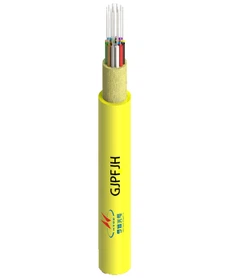


Can OM2 be used in data centers?
As a supplier of OM2 optical fiber, I often encounter questions from customers regarding the suitability of OM2 for data centers. In this blog post, I'll delve into the characteristics of OM2, compare it with other multimode fiber types, and analyze its viability in modern data - center environments.
Understanding OM2 Multimode Fiber
OM2 is a type of multimode fiber that has been around for quite some time. It has a core diameter of 50 micrometers and is designed to support multiple light modes simultaneously. The main advantage of multimode fiber, including OM2, is its ability to handle a large amount of data transmission through different paths of light within the fiber core.
OM2 fiber has a bandwidth - distance product that allows it to support Gigabit Ethernet (GbE) over distances of up to 550 meters. This makes it a reliable choice for shorter - range data transmissions within a building or a campus - style data center. The fiber is also relatively cost - effective compared to some of the newer fiber types, which can be an important consideration for budget - conscious data center operators.
You can find more detailed information about OM2 at OM2.
The Evolution of Multimode Fiber in Data Centers
Over the years, data center requirements have evolved significantly. With the increasing demand for higher data transfer speeds, such as 10 Gigabit Ethernet (10GbE), 40 Gigabit Ethernet (40GbE), and even 100 Gigabit Ethernet (100GbE), newer multimode fiber types have emerged.
Multimode fiber OM3 is one such advancement. OM3 fiber has a higher bandwidth - distance product compared to OM2. It can support 10GbE over distances of up to 300 meters. OM3 fiber uses a different laser - optimized design, which reduces modal dispersion and allows for faster data transmission. You can learn more about Multimode fiber om3.
OM4 is another step forward. OM4 offers even better performance than OM3. It can support 10GbE over longer distances and is well - suited for 40GbE and 100GbE applications. For more details on OM4, visit OM4.
Advantages of Using OM2 in Data Centers
Despite the emergence of newer multimode fiber types, OM2 still has its place in data centers.
Cost - Efficiency
One of the most significant advantages of OM2 is its cost. For data centers with limited budgets or those that do not require extremely high - speed data transmission, OM2 can be a cost - effective solution. The initial investment in OM2 fiber and associated equipment is generally lower than that of OM3 or OM4. This makes it an attractive option for small to medium - sized data centers or those undergoing a phased upgrade.
Compatibility
OM2 fiber is compatible with a wide range of existing network equipment. Many older network switches, servers, and other devices are designed to work with OM2 fiber. This means that data center operators can continue to use their existing infrastructure without having to replace all the equipment at once. This compatibility can save both time and money during the upgrade or expansion process.
Shorter - Range Applications
In data centers where the distance between network devices is relatively short, OM2 can provide sufficient performance. For example, in a small server room where servers are located close to each other, OM2 fiber can easily support Gigabit Ethernet connections. This makes it a practical choice for local area networks (LANs) within the data center.
Limitations of Using OM2 in Data Centers
However, OM2 also has some limitations that need to be considered.
Bandwidth Limitations
As data center requirements continue to grow, the bandwidth limitations of OM2 become more apparent. OM2 is not well - suited for high - speed data transmission over long distances. For applications that require 10GbE, 40GbE, or 100GbE, OM2 fiber may not be able to provide the necessary performance. The modal dispersion in OM2 fiber can cause signal degradation at higher data rates, leading to errors and reduced network reliability.
Future - Proofing
In terms of future - proofing, OM2 may not be the best choice. As technology advances and data center requirements increase, the need for higher - speed data transmission will only become more pronounced. Data centers that invest in OM2 may find themselves needing to upgrade their fiber infrastructure sooner than those that choose OM3 or OM4.


Case Studies: OM2 in Real - World Data Centers
Let's look at a few real - world examples to understand how OM2 is being used in data centers.
In a small - scale data center of a local business, OM2 fiber was used to connect servers within a single server rack. The data center had a relatively low - volume data traffic requirement, mainly supporting basic file sharing and internal email services. OM2 fiber provided a reliable and cost - effective solution for this application. The business was able to save on infrastructure costs by using OM2 instead of more expensive fiber types.
On the other hand, a large - scale enterprise data center that was planning to upgrade to 40GbE found that OM2 was not suitable for its requirements. The data center needed to support high - speed data transmission between multiple server farms and data storage facilities. In this case, the data center operator decided to upgrade to OM4 fiber to ensure reliable and high - speed data transfer.
Conclusion
In conclusion, OM2 can be used in data centers, but its suitability depends on several factors. For data centers with limited budgets, short - range requirements, and existing OM2 - compatible infrastructure, OM2 can be a viable option. It offers cost - efficiency and compatibility, making it a practical choice for small to medium - sized data centers or specific applications within larger data centers.
However, for data centers that require high - speed data transmission, long - distance connectivity, or future - proofing, OM2 may not be the best choice. Newer multimode fiber types like OM3 and OM4 offer better performance and are more suitable for modern data center requirements.
If you're considering using OM2 in your data center or have any questions about our OM2 fiber products, we'd love to have a discussion with you. Feel free to reach out to us to start a procurement - related conversation and find the best solution for your data center needs.
References
- ITU - T G.651.1: Characteristics of a 50/125 μm multimode graded - index optical fibre cable for the 850 nm and 1300 nm wavelength regions.
- TIA - 568.3 - D: Commercial Building Telecommunications Cabling Standard Part 3: Optical Fiber Cabling Components.