



As a flat optical cable supplier, I often get asked about the materials used in the manufacturing of flat optical cables. In this blog post, I'll delve into the various materials that go into making these essential components of modern communication systems.
Optical Fibers
At the heart of any flat optical cable are the optical fibers. These are the medium through which light signals are transmitted. Typically, optical fibers are made from high - purity silica glass. Silica glass has several advantages that make it ideal for this purpose.
Firstly, it has extremely low attenuation, which means that light signals can travel long distances without significant loss of strength. This property is crucial for applications such as long - haul telecommunications and data center networks. The refractive index of silica glass can be precisely controlled during the manufacturing process. By creating a core with a slightly higher refractive index than the cladding, total internal reflection occurs, allowing light to be guided along the fiber with minimal leakage.
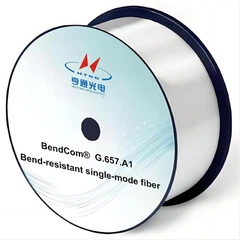
There are two main types of optical fibers used in flat optical cables: single - mode fibers (SMF) and multi - mode fibers (MMF). Single - mode fibers have a very small core diameter (usually around 9 micrometers), which allows only one mode of light to propagate. This results in very low dispersion and is suitable for high - speed, long - distance transmission. Multi - mode fibers, on the other hand, have a larger core diameter (commonly 50 or 62.5 micrometers), which can support multiple modes of light. They are often used for shorter - distance applications such as local area networks (LANs) within buildings.
Buffer Layers
To protect the delicate optical fibers from mechanical stress, buffer layers are applied. These layers are usually made of polymer materials. One common polymer used is polyimide. Polyimide has excellent thermal stability, chemical resistance, and mechanical strength. It can withstand high temperatures and harsh environmental conditions, which is important for ensuring the long - term reliability of the optical fibers.
Another popular material for buffer layers is acrylate. Acrylate is a cost - effective option that provides good protection against abrasion and moisture. It can be easily applied in a thin layer around the optical fibers during the manufacturing process. The buffer layer also helps to separate the optical fibers from each other, reducing the risk of cross - talk and interference between the signals carried by different fibers.
Strength Members
Flat optical cables need to have sufficient strength to withstand the stresses of installation and use. Strength members are incorporated into the cable design to provide this strength. One of the most commonly used materials for strength members is aramid yarn, also known as Kevlar. Aramid yarn has a very high tensile strength, which means it can resist pulling forces without breaking. It is lightweight, flexible, and does not conduct electricity, making it an ideal choice for optical cables.


In some cases, fiberglass rods are also used as strength members. Fiberglass is strong, rigid, and resistant to corrosion. It can provide additional support to the cable, especially in applications where the cable may be exposed to harsh mechanical conditions, such as in outdoor or industrial environments.
Jacket Materials
The outer jacket of a flat optical cable serves as the first line of defense against environmental factors such as moisture, sunlight, chemicals, and physical damage. There are several materials used for jacket construction.
Polyvinyl chloride (PVC) is a widely used jacket material due to its low cost, flexibility, and good resistance to chemicals and moisture. PVC jackets are commonly used in indoor applications, such as in office buildings and data centers. They are easy to install and can be customized with different colors for identification purposes.
For outdoor applications, polyethylene (PE) jackets are preferred. Polyethylene has excellent weather resistance, UV resistance, and water - repellency. It can protect the internal components of the cable from the elements, ensuring reliable performance in all weather conditions.
In some high - performance applications, flame - retardant materials such as low - smoke zero - halogen (LSZH) compounds are used for the jacket. LSZH materials produce little or no smoke and toxic gases when exposed to fire, which is crucial for safety in public buildings and transportation systems.
Uni - tube Single Jacket Flat Cable
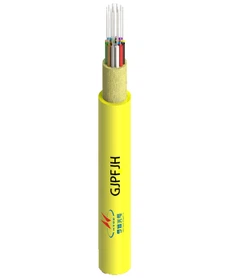
Now, let's take a look at a specific type of flat optical cable, the Uni - tube Single Jacket Flat Cable. This cable features a single tube that houses the optical fibers, which is then covered by a single jacket. The tube is typically made of a polymer material that provides additional protection to the fibers, while the jacket is selected based on the application requirements, such as PVC for indoor use or PE for outdoor use.
The design of the Uni - tube Single Jacket Flat Cable offers several advantages. It is more compact and lightweight compared to some other cable designs, which makes it easier to install in tight spaces. The single - tube construction also helps to reduce the risk of fiber damage during installation and handling.
Conclusion
In conclusion, the materials used in the manufacturing of flat optical cables play a crucial role in determining their performance, reliability, and suitability for different applications. From the high - purity silica glass optical fibers to the protective buffer layers, strength members, and outer jackets, each component is carefully selected and engineered to meet the demanding requirements of modern communication networks.
If you are in the market for high - quality flat optical cables, whether it's the Uni - tube Single Jacket Flat Cable or other types, I encourage you to reach out to discuss your specific needs. Our team of experts can provide you with detailed information, technical support, and customized solutions to ensure that you get the best - suited optical cables for your project. We are committed to delivering products that meet the highest standards of quality and performance. Contact us today to start the procurement discussion and take your communication infrastructure to the next level.
References
- "Optical Fiber Communications" by Gerd Keiser.
- "Fiber Optic Technology: Foundations, Components, and Systems" by Joseph C. Palais.
- Industry standards and specifications from organizations such as the Telecommunications Industry Association (TIA) and the International Electrotechnical Commission (IEC).