



In today's digital age, the demand for high - speed, reliable data transmission has skyrocketed. Fiber optic cable assemblies have emerged as a cornerstone technology in meeting this demand, playing a crucial role in various industries such as telecommunications, data centers, and industrial automation. As a supplier of fiber optic cable assemblies, I am constantly observing and analyzing the market trends to better serve our customers and stay ahead in this competitive industry.
Current Market Landscape
The fiber optic cable assembly market has been experiencing significant growth in recent years. This growth can be attributed to several factors. Firstly, the rapid expansion of the 5G network has created a huge demand for high - bandwidth fiber optic solutions. 5G requires a denser network infrastructure with a large number of small cells, and fiber optic cables are essential for connecting these cells to the core network, providing the high - speed data transmission needed for applications like video streaming, IoT, and autonomous vehicles.
Secondly, the increasing adoption of cloud computing and big data analytics has led to the construction of large - scale data centers. These data centers need to transfer massive amounts of data between servers, storage systems, and network devices. Fiber optic cable assemblies offer low latency, high bandwidth, and high reliability, making them the ideal choice for data center inter - connectivity.
In addition, the industrial sector is also increasingly relying on fiber optic technology. In manufacturing plants, fiber optic cables are used for machine - to - machine communication, real - time monitoring, and control systems. They can withstand harsh environments, such as high temperatures, electromagnetic interference, and vibrations, ensuring stable operation in industrial settings.
Technological Advancements
One of the key trends in the fiber optic cable assembly market is the continuous technological innovation. New materials and manufacturing processes are being developed to improve the performance and reduce the cost of fiber optic cables.
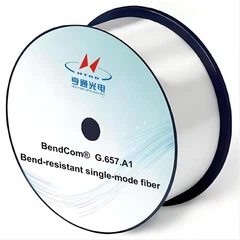
For example, the development of bend - insensitive fiber has significantly enhanced the flexibility of fiber optic cable assemblies. Bend - insensitive fiber can withstand tight bends without significant signal loss, which is very useful in applications where space is limited, such as in building wiring and data center cabling.
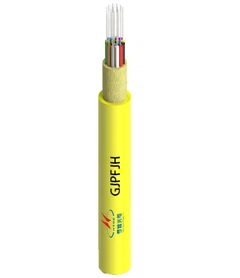
Another important technological advancement is the increase in the number of fibers in multi - fiber cable assemblies. Multi - fiber cables can carry multiple data channels simultaneously, increasing the overall bandwidth of the cable. For instance, our Multi - Fiber FC To FC Cable Assembly is designed to meet the high - density connectivity requirements of modern data centers. With more fibers packed into a single cable, it can significantly reduce the cable management complexity and save installation space.
The use of advanced connector technologies is also a significant trend. Connectors are the critical components of fiber optic cable assemblies, as they determine the quality of the optical connection. New connector designs, such as the LC and MPO connectors, offer lower insertion loss, higher return loss, and easier installation. Our SC to SC Duplex Fiber Optic Jumper Cable uses high - quality SC connectors, which provide reliable and stable connections for short - distance and medium - distance applications.
Market Segmentation and Application Trends
The fiber optic cable assembly market can be segmented into different categories based on application, fiber type, and connector type.
Telecommunications
In the telecommunications industry, the demand for long - distance fiber optic cables is still strong. These cables are used for backbone networks, connecting different cities and regions. Single - mode fiber is the dominant fiber type in long - distance telecommunications due to its low attenuation and high bandwidth over long distances. At the same time, the deployment of fiber - to - the - home (FTTH) projects is also accelerating. Pre - Connectorized Drop Cable is a popular choice for FTTH applications, as it can significantly reduce the installation time and cost. It comes pre - terminated with connectors, allowing for quick and easy connection to the optical network terminal (ONT) in the customer's premises.
Data Centers
Data centers are one of the fastest - growing segments in the fiber optic cable assembly market. In data centers, there is a trend towards higher - density and higher - speed connectivity. Multi - mode fiber is widely used for short - distance connections within the data center, such as between servers and switches. The transition from 10Gbps to 40Gbps, 100Gbps, and even higher - speed networks is driving the demand for advanced fiber optic cable assemblies. For example, MPO - based multi - fiber cables are commonly used in high - speed data center interconnects to support parallel data transmission.
Industrial Automation
In the industrial automation sector, fiber optic cables are used for a variety of applications, including machine vision, robotics, and process control. The harsh industrial environment requires fiber optic cables with high durability and reliability. Armored fiber optic cables are often used in industrial settings to protect the fibers from mechanical damage, moisture, and chemical corrosion.


Competitive Landscape
The fiber optic cable assembly market is highly competitive, with many players in the global market. Large multinational companies, as well as local manufacturers, are competing for market share. The competition is mainly based on product quality, price, technological innovation, and customer service.
To stay competitive, we focus on providing high - quality products that meet or exceed industry standards. Our fiber optic cable assemblies undergo strict quality control procedures during the manufacturing process, including fiber testing, connector polishing, and final assembly testing. We also invest in research and development to continuously improve our products and develop new solutions to meet the changing market needs.
In addition, we offer competitive pricing and excellent customer service. We understand that our customers need cost - effective solutions without compromising on quality. Our sales and technical support teams are always ready to assist customers with their inquiries, from product selection to installation and troubleshooting.
Future Outlook
Looking ahead, the fiber optic cable assembly market is expected to continue its growth trajectory. The development of emerging technologies such as 6G, artificial intelligence, and the Internet of Things (IoT) will further drive the demand for high - speed and reliable fiber optic solutions.
In the 6G era, the data transmission requirements will be even more demanding, with higher bandwidth, lower latency, and greater connectivity density. Fiber optic cable assemblies will play a vital role in supporting the 6G network infrastructure, from the core network to the edge devices.
The continuous expansion of the IoT will also lead to a massive increase in the number of connected devices. These devices need to communicate with each other and with the cloud, generating a huge amount of data. Fiber optic cables will be the backbone of the IoT network, providing the high - speed data transfer needed for real - time monitoring and control.
Conclusion
As a supplier of fiber optic cable assemblies, we are well - positioned to capitalize on the market trends. We offer a wide range of products, including Pre - Connectorized Drop Cable, Multi - Fiber FC To FC Cable Assembly, and SC to SC Duplex Fiber Optic Jumper Cable, to meet the diverse needs of our customers in different industries.
If you are interested in our fiber optic cable assemblies or have any questions about our products, please feel free to contact us for procurement and further discussion. We are committed to providing you with the best products and services to support your business growth.
References
- "Fiber Optics for Telecommunications" by R. Ramaswami, K. N. Sivarajan, and G. Sasaki
- "Data Center Cabling: Best Practices" by Data Center Journal
- "Industrial Fiber Optics: Theory and Practice" by Jim Hayes