





When it comes to laying underground fibre optic cables, one of the most frequently asked questions is: "How deep should an underground fibre optic cable be buried?" As a leading underground fibre optic cable supplier, I've encountered this question countless times from various clients, ranging from small - scale local networking projects to large - scale telecommunications infrastructure developments. In this blog, I'll delve into the factors that determine the burial depth of underground fibre optic cables and provide some general guidelines.
1. Safety and Protection
The primary reason for burying fibre optic cables underground is to protect them from external damage. Cables need to be buried deep enough to avoid accidental damage from surface activities such as construction, landscaping, and agricultural work. For general residential and commercial areas, a burial depth of around 24 inches (60 cm) is often recommended. This depth provides a sufficient buffer between the cable and the surface, reducing the risk of the cable being cut or damaged by shovels, plows, or other common tools used in these areas.

In areas with more intense surface activities, such as construction sites or industrial zones, a deeper burial depth may be required. A depth of 36 inches (90 cm) or more can offer better protection against heavy machinery and excavation work. For example, in large - scale construction projects where heavy earth - moving equipment is constantly in operation, burying the cable at a greater depth ensures that it remains intact even if there are accidental digs in the vicinity.
2. Environmental Factors
Environmental conditions play a crucial role in determining the burial depth of fibre optic cables. In regions with harsh winters and freezing temperatures, cables need to be buried below the frost line. The frost line is the depth to which the ground freezes during the coldest part of the winter. If a cable is buried above the frost line, the expansion and contraction of the frozen soil can cause the cable to break or become damaged. The depth of the frost line varies depending on the geographical location. In colder northern regions, the frost line can be as deep as 60 inches (150 cm), while in warmer southern areas, it may be only a few inches deep.
In addition to freezing temperatures, other environmental factors such as soil type and water table also need to be considered. In areas with sandy or loose soil, the cable may need to be buried deeper to prevent it from being washed away by heavy rains or floods. On the other hand, in areas with high water tables, proper drainage systems and a suitable burial depth are necessary to keep the cable dry and prevent water damage. For example, in marshy or low - lying areas, the cable may need to be placed in a protective conduit and buried at a depth that ensures it is above the normal water level.
3. Cable Type
Different types of fibre optic cables have different requirements for burial depth. Some cables are designed to be more rugged and can withstand harsher conditions, while others are more delicate and require extra protection.
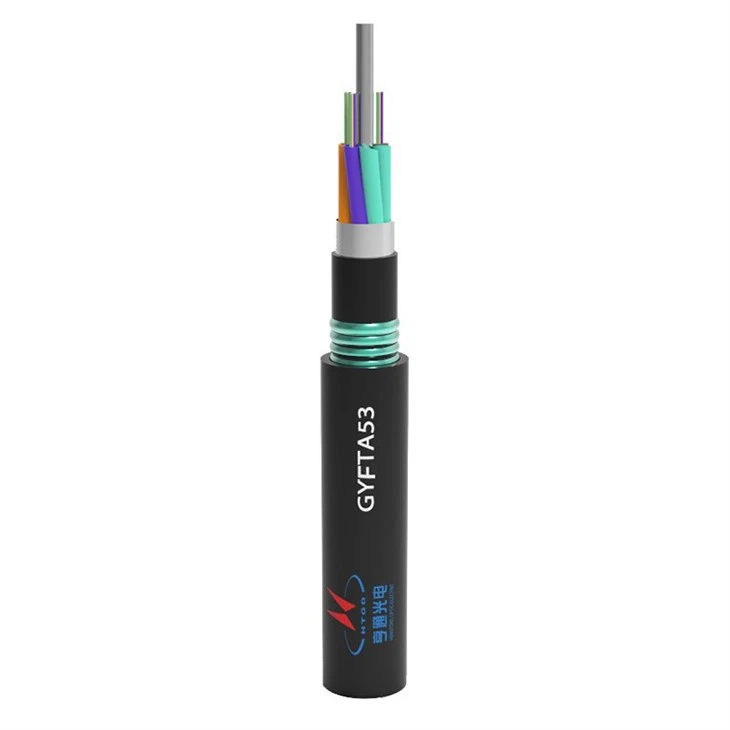
Our Multi Tube Double Jacket and Armored Direct Buried Cable is a great option for areas where the cable needs to be buried at a relatively shallow depth. This cable is equipped with a double jacket and armor, which provides excellent protection against mechanical damage and environmental factors. It can be buried at a depth of 24 inches (60 cm) in most residential and commercial areas, offering a good balance between protection and ease of installation.
The FRP Strength Member Multitube Single Jacket Duct Cable is another type of cable that we offer. This cable features a fiber - reinforced plastic (FRP) strength member, which provides high tensile strength. It is suitable for use in ducts or conduits and can be buried at a depth that is appropriate for the specific application. In some cases, it can be installed at a shallower depth compared to other cables, especially when it is protected by a duct system.
Our Non Metallic Double Jacket Cable is designed for areas where electromagnetic interference (EMI) is a concern. This cable has a non - metallic construction, which makes it immune to EMI. It can be buried at a depth of 24 - 36 inches (60 - 90 cm) depending on the environmental conditions and the level of protection required.
4. Regulatory Requirements
Local regulations and codes also have a significant impact on the burial depth of underground fibre optic cables. Many municipalities and regulatory bodies have specific requirements regarding the installation of underground utilities, including fibre optic cables. These regulations are in place to ensure the safety of the public and the integrity of the cable infrastructure.
Before installing a fibre optic cable, it is essential to check with the local authorities to determine the applicable regulations. Some areas may have minimum burial depth requirements, while others may specify additional installation requirements such as the use of warning tape or markers to indicate the presence of the cable. Failure to comply with these regulations can result in fines and delays in the project.
5. Cost - Benefit Analysis
When deciding on the burial depth of a fibre optic cable, a cost - benefit analysis should be conducted. Burying a cable deeper generally requires more excavation work, which increases the installation cost. On the other hand, a shallower burial depth may save on installation costs but may increase the risk of damage and the need for future repairs.
For small - scale projects with a limited budget, a shallower burial depth may be a more cost - effective option, provided that the environmental and safety risks are carefully evaluated. However, for large - scale, long - term projects, investing in a deeper burial depth can save money in the long run by reducing the likelihood of cable damage and the associated repair and replacement costs.
Conclusion
Determining the appropriate burial depth for an underground fibre optic cable is a complex decision that requires careful consideration of multiple factors, including safety, environmental conditions, cable type, regulatory requirements, and cost - benefit analysis. As an underground fibre optic cable supplier, we understand the importance of providing our clients with the right advice and products to ensure the successful installation and long - term performance of their cable systems.
If you are planning an underground fibre optic cable project and need more information or advice on the burial depth, cable selection, or any other aspect of the installation, please feel free to contact us. Our team of experts is ready to assist you in making the best decisions for your project. We offer a wide range of high - quality underground fibre optic cables, including the Multi Tube Double Jacket and Armored Direct Buried Cable, FRP Strength Member Multitube Single Jacket Duct Cable, and Non Metallic Double Jacket Cable. Let's work together to ensure the success of your fibre optic cable project.
References
- Telecommunications Industry Association (TIA). Telecommunications Cabling Standards.
- National Electrical Code (NEC). Electrical Installation Requirements.
- Local Municipal Codes and Regulations.